


Things to consider when getting a paver patio
Dutchess County's PRemier Patio Builders
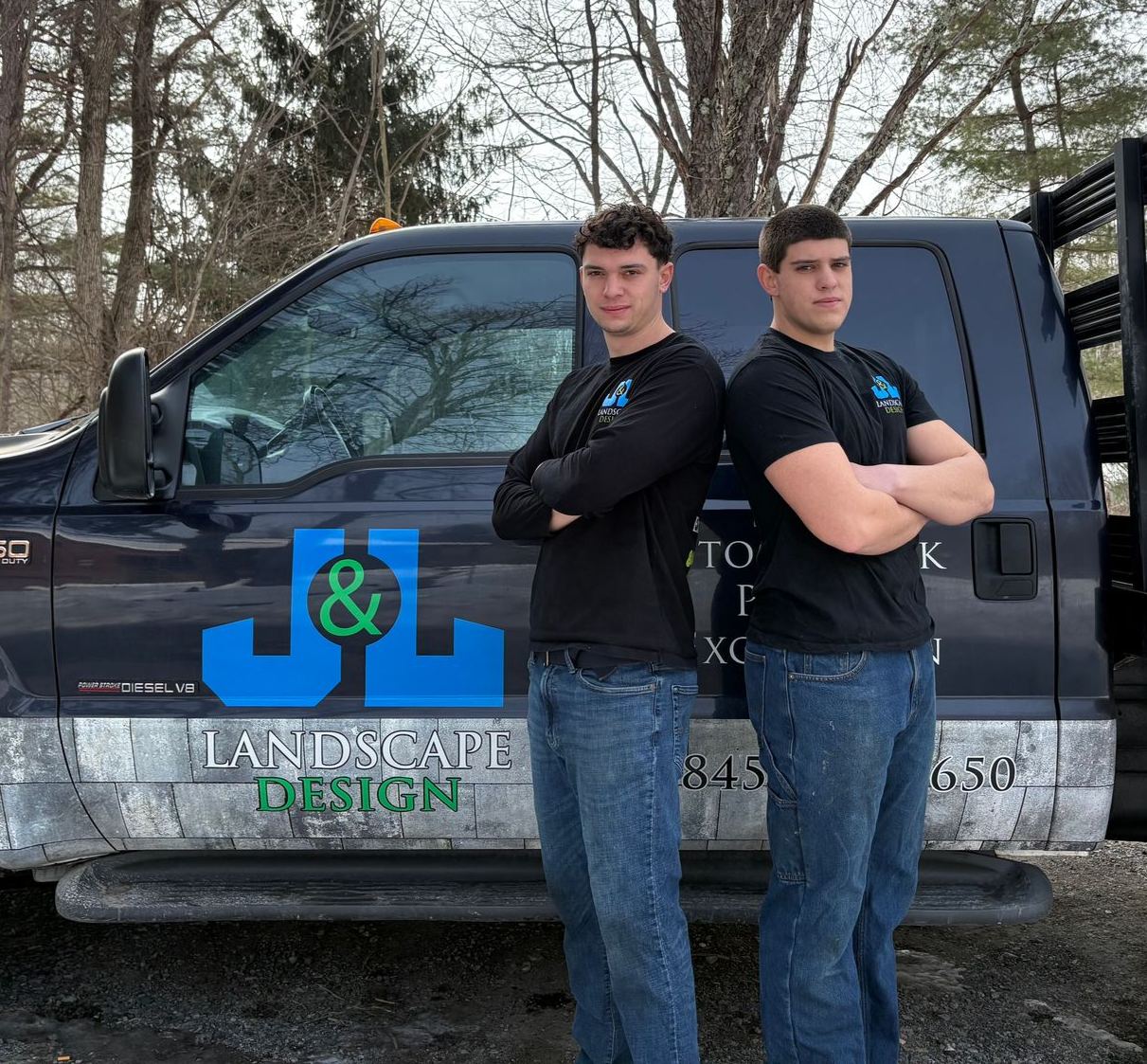
My name is Lucas Acampora, and I am one of the owners of J&L Landscape Design. My brother and I install patios, pavers, stonework, walkways, retaining walls, outdoor kitchens, fireplaces, and steps throughout Dutchess County and the surrounding area.
I wrote this page to help you understand what actually goes into a patio project before you start comparing materials, layouts, and quotes. A patio is not just the surface you see when the job is done. The base, drainage, layout, materials, borders, and add-ons all affect how the patio looks, functions, and holds up over time.
Table of Contents
For more information about our services or to schedule an appointment, call us at (845) 309-7650 or complete the form below we’ll get back to you as soon as we can.
Patio Materials We Install
When I help a homeowner plan a patio, one of the first things we talk about is material. The right material depends on the style of your home, how you want to use the space, your budget, and how much maintenance you are comfortable with.
At J&L Landscape Design, we install several patio materials, including pavers, bluestone, travertine, and natural stone.
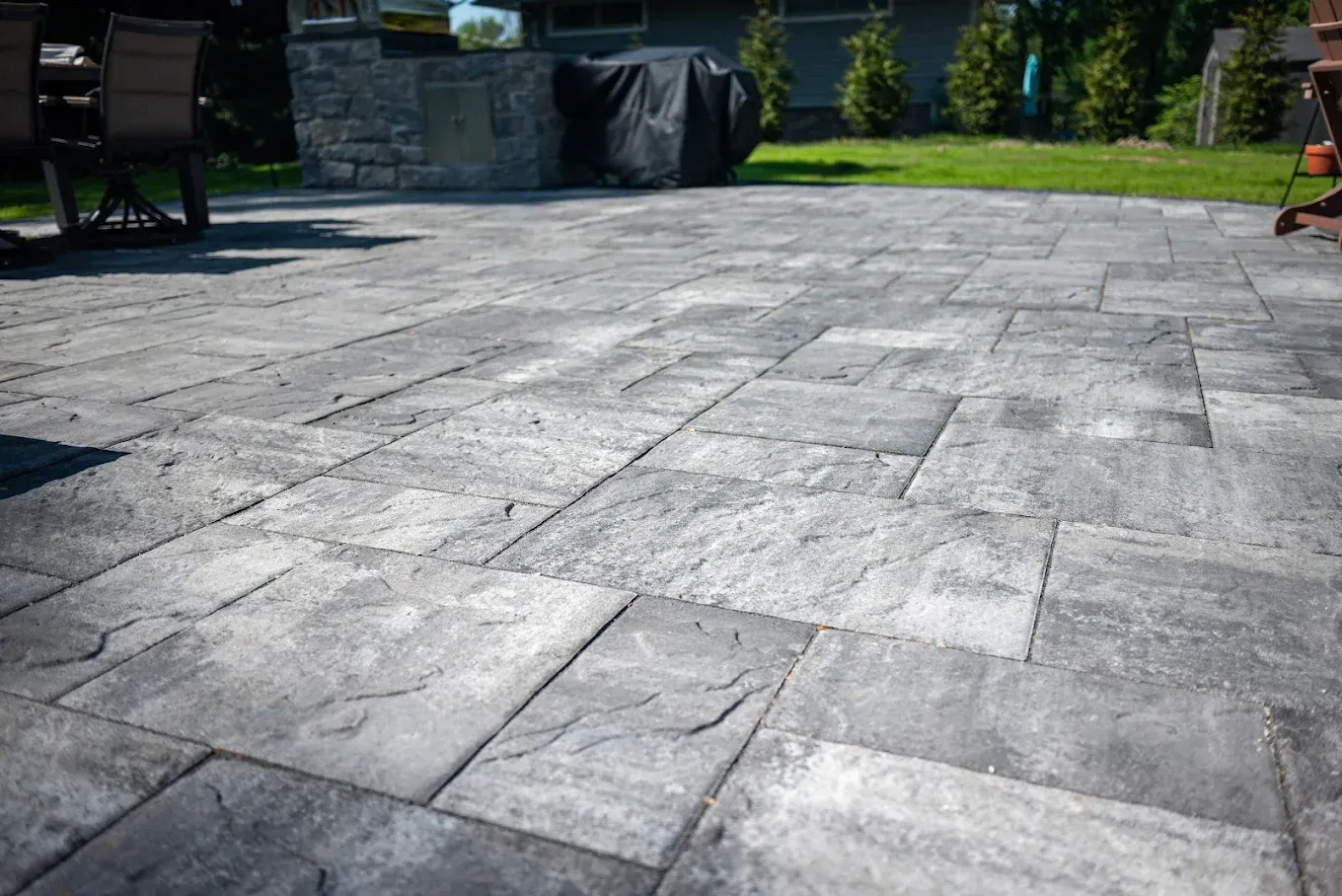
Paver Patios
Pavers are one of the most popular patio materials we install because they offer a strong mix of durability, design flexibility, and value. They come in many colors, textures, shapes, and sizes, which makes it easier to match your home and create a custom layout.
A properly installed paver patio starts with the base. That is the part you do not see when the job is finished, but it is one of the most important parts of the project. We excavate, prepare the base, compact the stone in layers, set the pitch for water runoff, install the bedding layer, lay the pavers, secure the edges, and finish the joints.
If the base is not done correctly, the patio can settle, shift, hold water, or become uneven over time. That is why I always focus heavily on excavation, compaction, drainage, and edge restraint before we ever get to the final look.
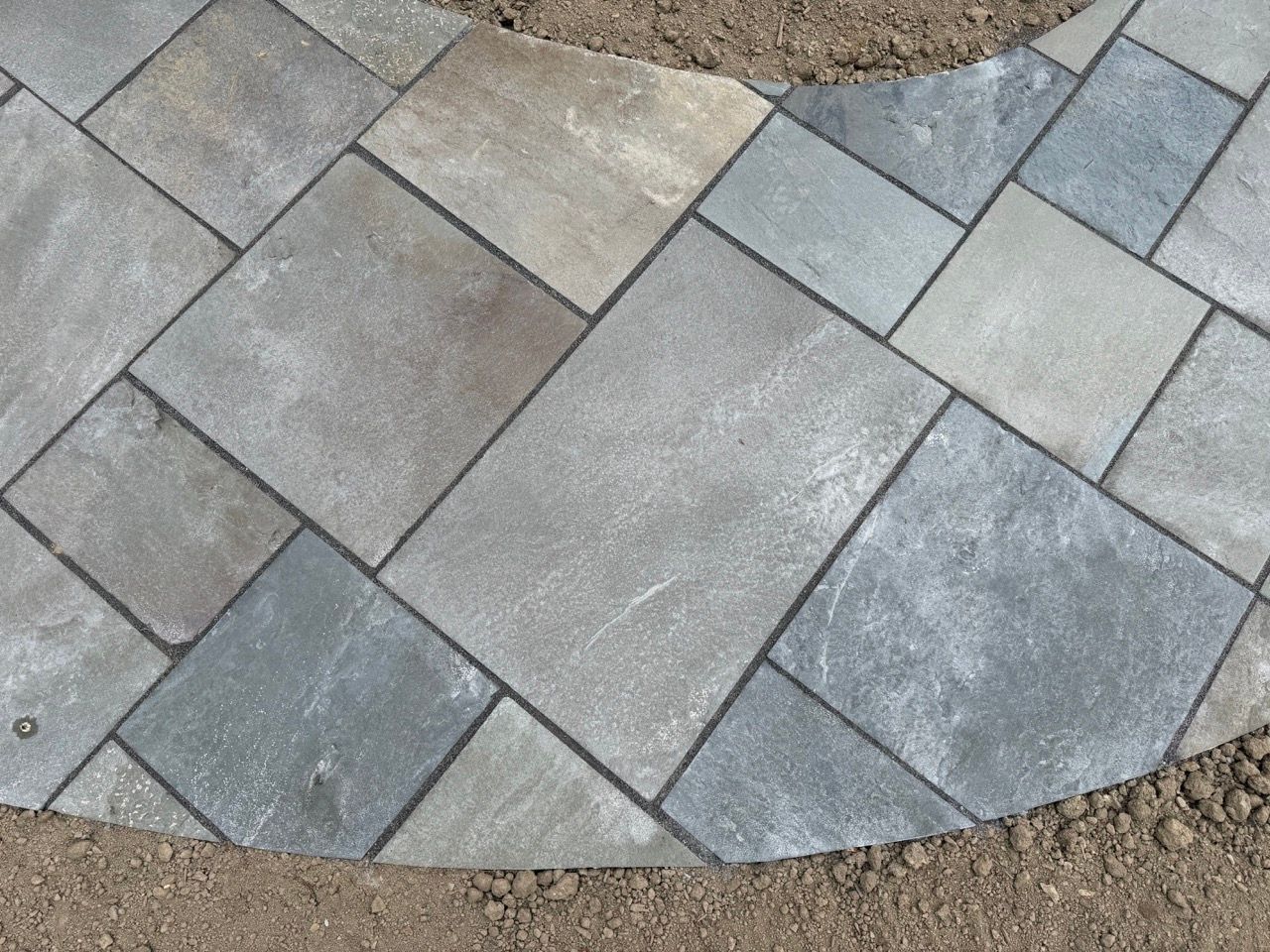
Bluestone Patios
Bluestone is a natural stone option with a classic Northeast look. It works especially well for homeowners who want a timeless patio with a more natural, high-end appearance.
Bluestone can be installed in different formats, including thermal bluestone, irregular bluestone, and pattern-cut bluestone. It can look formal and clean, or more rustic and natural depending on the style you choose.
Bluestone is a great option for patios, walkways, landings, and steps. It is often more expensive than standard concrete pavers, but many homeowners choose it because of the natural color variation and long-term character.
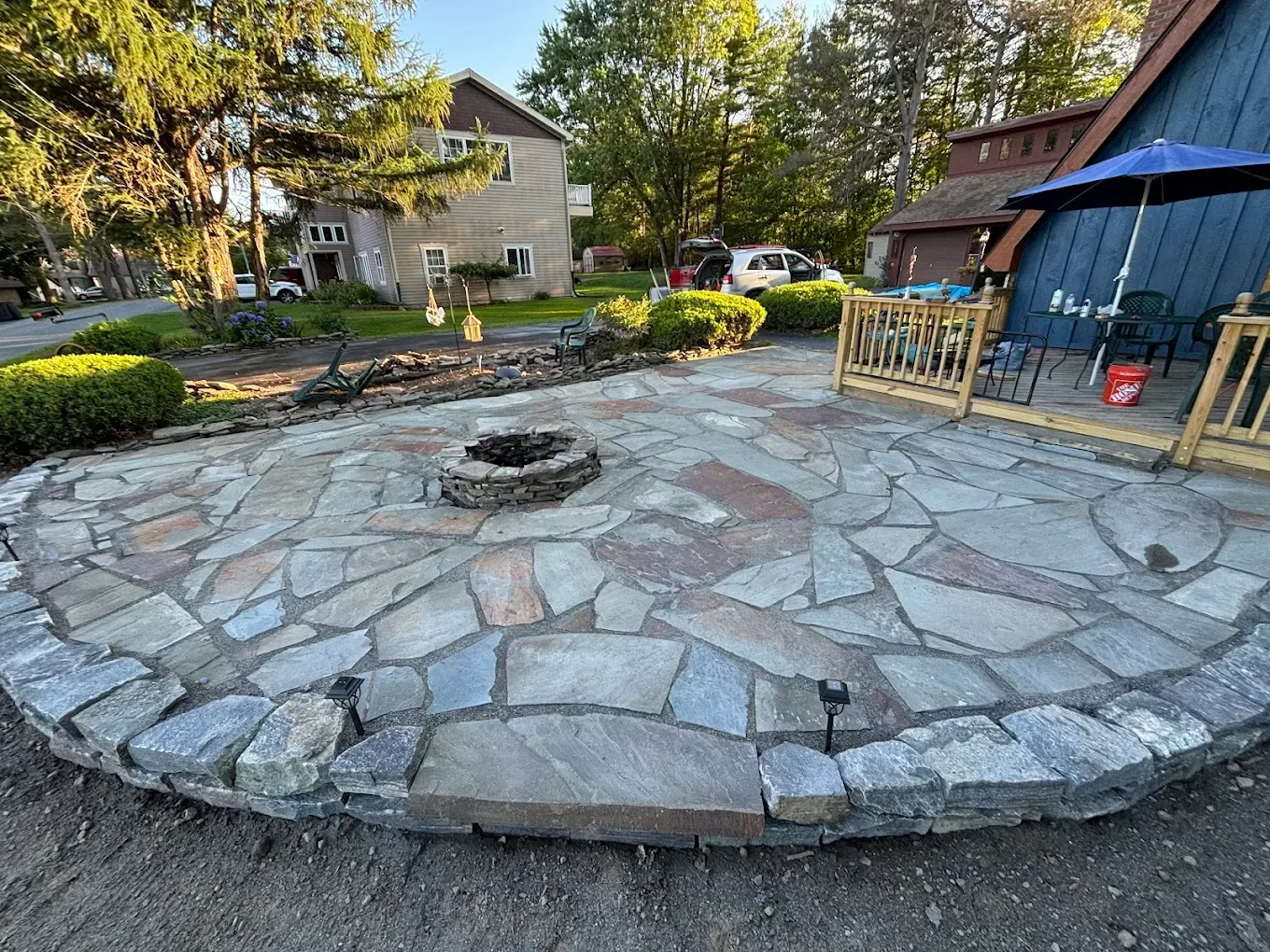
Natural Stone Patios
Natural stone patios can include a variety of stone types and styles. Some homeowners like a clean, pattern-cut stone patio. Others prefer a more organic look with irregular stone.
Natural stone is a good option when you want the patio to blend into the landscape and feel more custom. It works well around gardens, wooded properties, older homes, and outdoor spaces where a manufactured paver may feel too uniform.
Natural stone usually requires more planning and labor than a basic paver patio, but the finished result can be beautiful when the layout, joints, and transitions are handled correctly.
Popular Patio Features and Add-Ons
A patio can be simple, or it can become the main outdoor living area of your home. When I meet with homeowners, I like to ask how they actually plan to use the space. That answer usually tells us which features make sense.
Some people want a quiet place for a table and chairs. Others want a full backyard entertaining area with a firepit, seating wall, outdoor kitchen, lighting, and walkways connecting everything together.
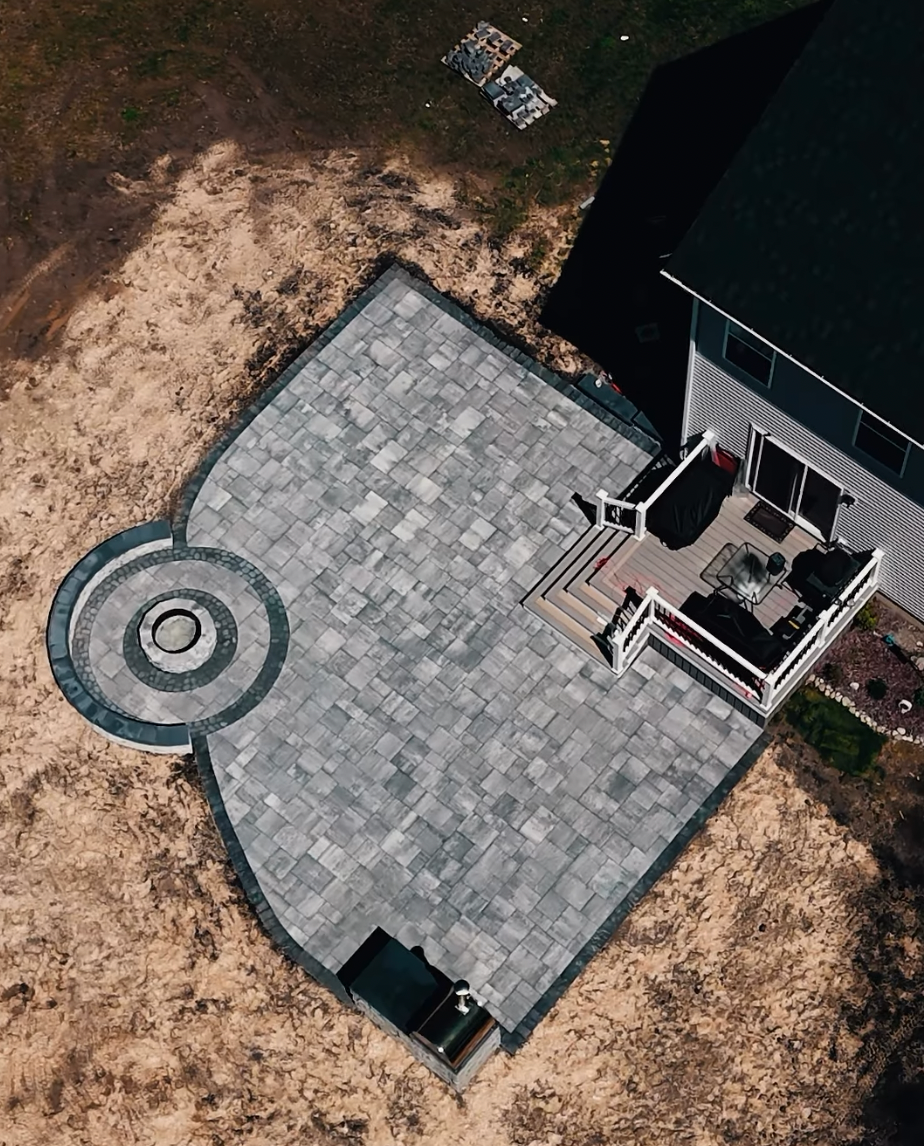
Firepits
Firepits are one of the most popular patio add-ons because they make the space more usable in the evening and during cooler months. A firepit also gives the patio a natural gathering point.
The firepit can be built into the patio layout, placed in a separate patio area, or designed as part of a larger seating space. The size and location matter because you need enough room for chairs, foot traffic, and safe spacing around the fire feature.
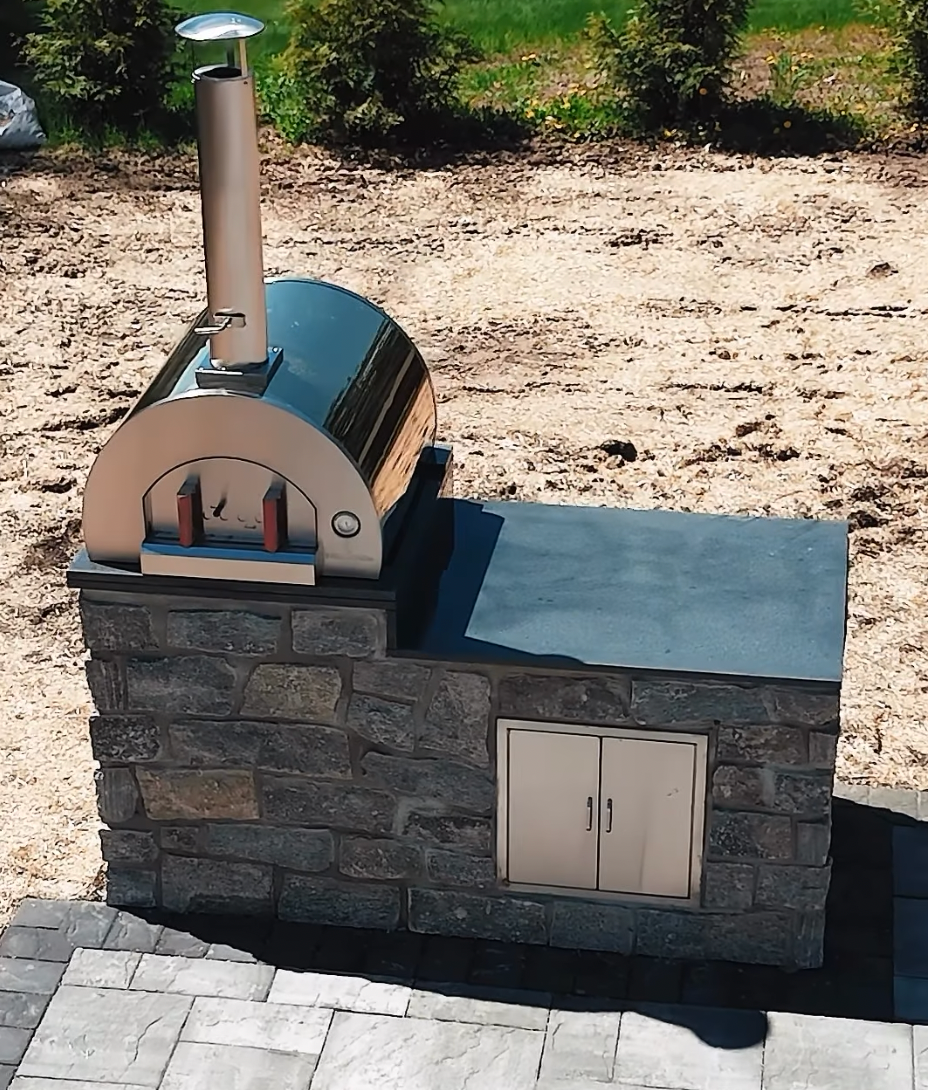
Pizza Ovens
Pizza ovens are a great option if you want your patio to feel like a true outdoor entertaining space. They can be built into an outdoor kitchen area or designed as a standalone feature.
A pizza oven usually requires more planning than a basic patio add-on because we need to think about the base, surrounding counter space, access, heat, and how people will move around the area while cooking and entertaining.
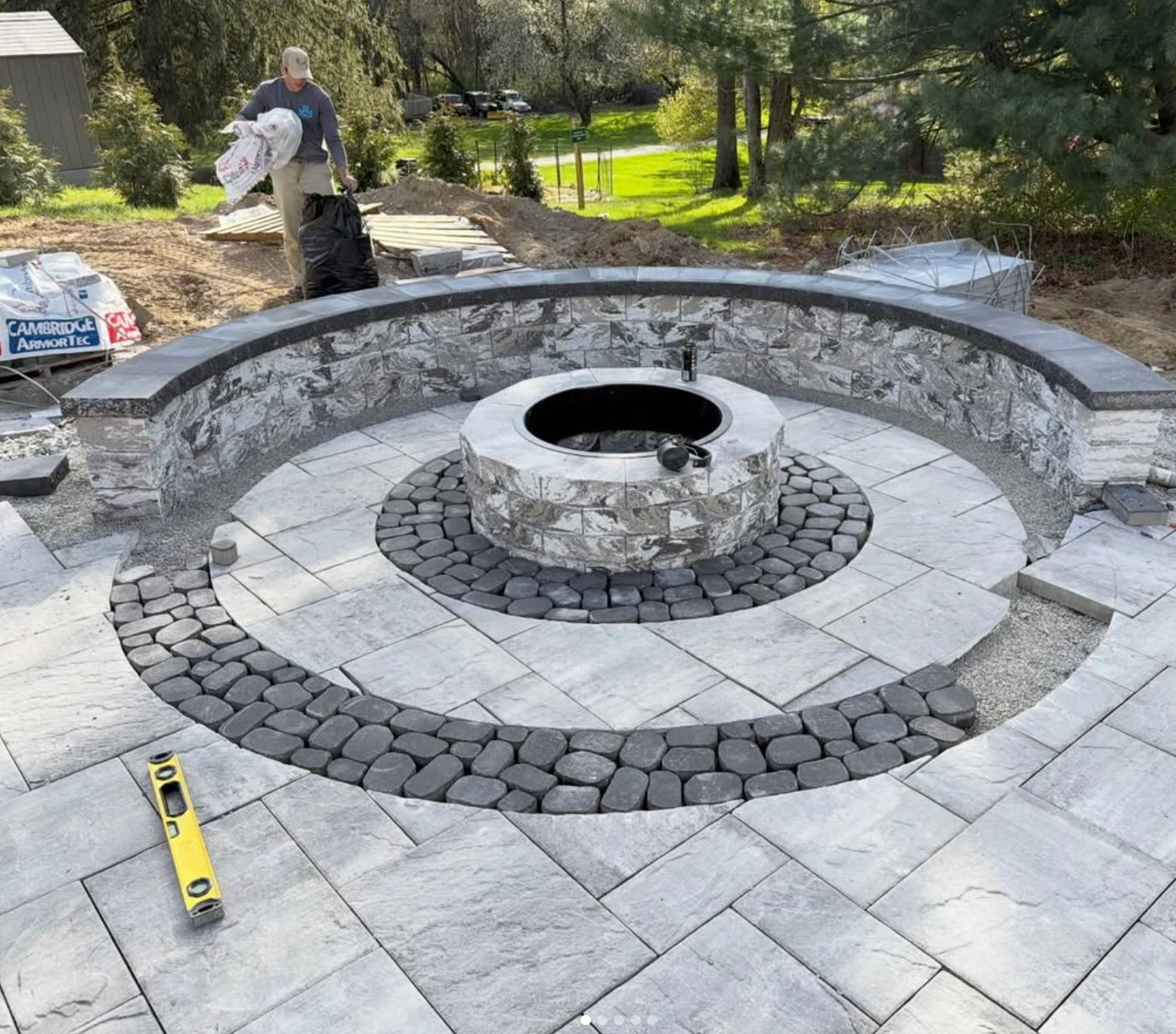
Seating Walls
A seating wall can make a patio feel more finished and functional. It creates built-in seating, defines the edge of the patio, and can help separate the patio from the rest of the yard.
Seating walls are especially useful around firepits, patios built into a slope, or spaces where you want a more structured outdoor room feel. They can also be combined with pillars, lighting, steps, and planting beds.
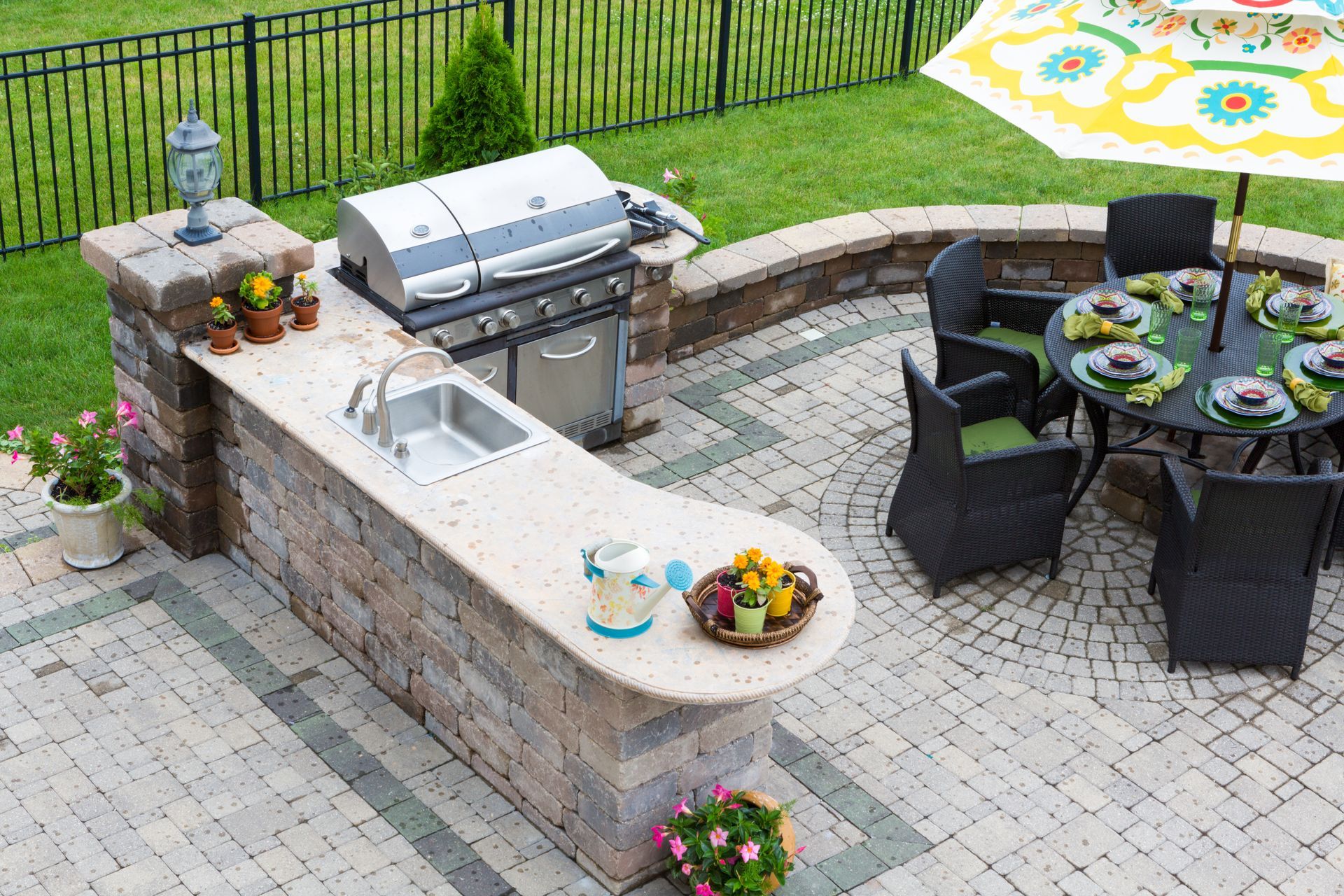
Outdoor Kitchens
An outdoor kitchen can range from a simple grill station to a full cooking area with counter space, storage, a refrigerator, a sink, a pizza oven, or built-in appliances.
When we plan an outdoor kitchen, I look at the patio layout as a whole. The kitchen needs to be convenient, but it should not block the flow of the space. You want room to cook, serve food, sit, and move comfortably.
Ways to Customize Your Patio Design
The difference between a basic patio and a custom patio often comes down to the details. A good patio should fit the home, the yard, and the way you plan to use the space.
Here are some of the most common ways we customize patios for homeowners in Dutchess County.
Borders
Borders are one of the easiest ways to make a patio look more finished. A contrasting border can frame the patio, define the shape, and add detail without making the design feel too busy.
Some homeowners choose a simple single border. Others choose a double border or a different color blend to create more contrast.
Paver Patterns
The pattern affects the look and feel of the patio. Some patterns feel clean and modern. Others feel more traditional or natural.
Common patio patterns include running bond, random pattern, herringbone, basketweave, and modular layouts. The best pattern depends on the paver style, the shape of the patio, and the overall design.
Color Blends
Pavers and natural stone come in many color options. Some homeowners want gray and charcoal tones. Others prefer tan, brown, beige, blue, or natural stone blends.
I usually recommend choosing colors that work with the house, not just colors that look good on a sample board. The siding, trim, roof, deck, fence, and surrounding landscape all affect how the patio color will look once it is installed.
Inlays and Accent Areas
Inlays can add a custom touch to a patio. This might include a different paver pattern, a center detail, a border around a firepit, or a separate dining area.
Accent areas work best when they have a purpose. I do not like adding details just to add details. The design should make the patio easier to use and better to look at.
Curves and Shape
The shape of the patio can be square, rectangular, curved, rounded, or completely custom.
A rectangular patio is often more cost-effective and works well for dining areas. Curved patios can feel more natural and blend better into the yard, but they usually require more cutting and labor.
Lighting
Lighting can make a patio safer and more usable at night. It can be added to steps, seating walls, pillars, outdoor kitchens, walkways, or surrounding landscape beds.
Lighting should be planned early because it affects the layout and installation process.
Separate Outdoor Zones
For larger patios, I like to think in zones. You may have one area for dining, one area for lounging, one area for the firepit, and another area for cooking.
This makes the patio feel organized and helps avoid the common mistake of building one large patio that looks good in photos but does not function well in real life.
Cost of paver patios in Dutchess County, NY and cost factors
The honest answer is that patio pricing depends on the size, material, access, excavation, base requirements, drainage, design details, and add-ons.
For most paver patio projects in Dutchess County, a basic patio will cost less than a patio with premium materials, walls, steps, lighting, a firepit, or an outdoor kitchen. The more detailed the project becomes, the more labor, material, prep work, and planning it requires.
I do not like giving a homeowner a fake number before seeing the property because every yard is different. That said, I understand that people need a starting point before they decide whether to schedule an estimate.
The numbers below are ballpark ranges only. They are meant to help you understand common patio budgets, not replace an on-site quote.
| Patio Size | Common Use | Ballpark Cost Range |
|---|---|---|
| 10 ft x 10 ft, about 100 sq ft | Small seating area or grill pad | $3,500 to $7,500 |
| 12 ft x 12 ft, about 144 sq ft | Small dining or lounge area | $5,000 to $10,000 |
| 15 ft x 15 ft, about 225 sq ft | Medium patio for dining and seating | $8,000 to $16,000 |
| 20 ft x 20 ft, about 400 sq ft | Larger backyard patio | $14,000 to $28,000 |
| 500 to 700 sq ft | Patio with multiple zones | $20,000 to $45,000 plus |
| 800 sq ft and larger | Large outdoor living space | $35,000 to $75,000 plus |
These ranges can change based on the details of your project. A simple square paver patio with easy access will usually be on the lower end. A custom patio with premium pavers, curved borders, steps, walls, drainage work, and built-in features will be on the higher end.
What Affects the Cost of a Patio?
- The biggest cost factor is usually size. More square footage means more excavation, more base material, more pavers, more labor, more cutting, and more joint material.
- The second major factor is the material. Standard pavers are usually more budget-friendly than premium pavers, bluestone, travertine, or natural stone. Certain brands, textures, colors, and finishes can also increase the cost.
- Access also matters. If we can get equipment and materials close to the patio area, the job is more efficient. If everything has to be moved by hand through a narrow side yard, up a hill, or around obstacles, labor increases.
- Drainage can also affect price. If the yard holds water, slopes toward the house, or needs grading adjustments, we may need to include drainage solutions or additional base work.
- Removal is another factor. Taking out an old concrete patio, old pavers, tree roots, stumps, or existing landscape features can add labor and disposal costs.
- Design details also change the price. Borders, curves, inlays, pattern changes, steps, sitting walls, pillars, lighting, and fire features all add time and material.
Why Two Patio Quotes Can Be Very Different
If you get three patio quotes, you may notice that the numbers are not always close. Sometimes that is because one contractor is including details that another contractor is not.
When comparing patio estimates, I recommend asking what is included for excavation, base depth, base material, compaction, edge restraint, joint material, drainage, removal, cleanup, and warranty.
The cheapest quote is not always the best value if the base work, drainage, or finishing details are not handled correctly. A patio needs to look good on day one, but it also needs to stay solid after years of rain, freeze and thaw cycles, foot traffic, furniture, and regular use.
How Long Does a Paver Patio Installation Take?
Most standard paver patio installations take about 3 to 7 working days once we start the project. Smaller patios can sometimes be completed faster. Larger patios with walls, steps, firepits, outdoor kitchens, natural stone, or drainage work can take longer.
Weather can also affect the schedule. Heavy rain, wet soil, material delays, and site conditions can change the timeline.
Here is a general timeline for common patio projects:
| Project Type | Typical Installation Timeline |
|---|---|
| Small paver patio | 2 to 4 working days |
| Medium paver patio | 4 to 7 working days |
| Large patio with multiple areas | 1 to 2 weeks |
| Patio with seating wall or firepit | 1 to 2 weeks |
| Patio with retaining wall, steps, or outdoor kitchen | 2 weeks or more |
| 800 sq ft and larger | Large outdoor living space |
The best way to get a realistic timeline is to look at the property, review the design, and understand the full scope. During the estimate, I can usually give you a practical idea of how long your project should take.
Contact J&L Landscape Design, Dutchess County’s go-to patio Builders
If you are thinking about a new patio, walkway, firepit, seating wall, outdoor kitchen, or backyard living space, I would be happy to take a look at your property.
J&L Landscape Design is based in Wappingers Falls and serves homeowners throughout Poughkeepsie, Dutchess County, and nearby areas.
The best first step is an on-site estimate. I can look at your yard, talk through your goals, explain your options, and give you a clear quote based on the actual project.
Call J&L Landscape Design at (845) 309-7650
or request a free estimate online to start planning your patio.
For more information about our services or to schedule an appointment, call us at (845) 309-7650 or complete the form below we’ll get back to you as soon as we can.
Paver patio FAQs
How long does a paver patio last?
With proper installation and base prep, paver patios can last for decades. Maintenance is usually simple—keep joints healthy and address settling early if it ever occurs.
Do pavers crack like concrete?
Pavers are individual units, so you typically don’t see the same large cracking patterns you get with slabs. They’re designed to handle movement better.
Can you build a patio in phases?
Often, yes. Many homeowners start with the patio and add steps, walkways, seating, or an outdoor kitchen later.
Will water pool on my patio?
It shouldn’t. Patio pitch and drainage planning are part of doing the job correctly. We build so water moves away from your home.
What’s the best paver color for resale?
Neutral blends and natural tones tend to be timeless. We’ll help you match your home’s style and your goals.
Request an Appointment
For more information about our services or to schedule an appointment, call us at (845) 309-7650 or complete the form below we’ll get back to you as soon as we can.
Other Service
Request an Appointment
For more information about our services or to schedule an appointment, call us at (845) 309-7650 or complete the form below we’ll get back to you as soon as we can.
Our reviews
Five-Star Experiences,
Built One Project at a Time

We focus on the details people actually care about: showing up, communicating clearly, keeping the jobsite respectful, and delivering a finished product that feels worth it.
Local. Family-owned. In-house crew.
Service Area
Proudly Serving Poughkeepsie & all of Dutchess County

J&L Landscape Design serves homeowners throughout Dutchess County, NY—including Poughkeepsie—and select parts of Orange County.
Beacon
Fishkill
Wappingers Falls
East Fishkill
Hyde Park
LaGrange
Pleasant Valley
Rhinebeck
Newburgh (Orange County)
Don't see your area?
We may still serve you, give us a call at (845) 309-7650 or complete the form on our
contact page and we will let you know for sure.
