

Best Natural Stone Options for Patios, Walkways, and Steps
At JL Landscape, we work with natural stone on a daily basis. We have installed bluestone patios, granite steps, flagstone garden paths, and travertine pool surrounds across Connecticut. We know how each material behaves through freeze-thaw cycles, under heavy foot traffic, and over the long haul. This guide draws directly from that hands-on experience. Our goal is simple: help you understand your options so you can make a confident, informed decision.
Quick Answer: What Are the Best Natural Stones for Outdoor Projects?
The top natural stone options for patios, walkways, and steps are bluestone, flagstone, travertine, granite, limestone, slate, and sandstone. Each has strengths and tradeoffs depending on where it is used and what the local climate demands.
Bluestone and granite are the most versatile and durable choices for Connecticut's freeze-thaw climate. Flagstone is the go-to for a natural, organic aesthetic. Travertine works beautifully in warmer or protected settings. Limestone and slate offer distinctive looks but require more care. Sandstone brings warm color but needs consistent sealing to hold up outdoors.
The best stone for your project depends on three things: where it is going, how much traffic it will see, and your budget. The sections below break all of that down clearly.
Why Natural Stone Is a Top Choice for Outdoor Living Spaces
Natural stone has been used in outdoor construction for thousands of years, and for good reason. It is durable, visually distinctive, and tends to improve with age rather than degrade the way manufactured materials can.
Compared to concrete, natural stone offers far more character. No two slabs look the same, which gives finished projects a handcrafted quality that is difficult to replicate. Compared to concrete pavers, natural stone generally has a longer lifespan when properly installed and adds more to a home's curb appeal and resale value.
The tradeoffs are real too. Natural stone costs more upfront than poured concrete and more per square foot than most manufactured pavers. Installation requires more skill, especially with irregular materials like flagstone. And some stones need periodic sealing to stay protected.
For homeowners who want a backyard or front entry that looks distinctive and lasts for decades, natural stone is consistently the right investment.
Key Factors to Consider When Choosing Natural Stone
Before settling on a material, think through these six factors:
- Climate and weather resistance. Connecticut gets hard winters. Freeze-thaw cycles crack porous stones that are not properly sealed or that were not designed for cold climates. Dense, low-porosity stones like bluestone and granite handle this best.
- Intended use. A patio, a walkway, and a set of steps each place different demands on stone. Steps need load-bearing strength and clean, stable edges. Walkways need consistent surface texture for traction. Patios have more flexibility but benefit from comfort underfoot in summer heat.
- Texture and slip resistance. Smooth, polished stone looks refined but becomes dangerous when wet. For any outdoor application, a natural cleft or honed finish is safer and more practical than a polished one.
- Color, style, and design compatibility. Stone should complement the home's exterior and the surrounding landscape. Warm-toned stones like sandstone and travertine suit different architectural styles than the cool grays of bluestone or granite.
- Maintenance and sealing requirements. Porous stones like travertine, sandstone, and limestone need regular sealing to resist staining and moisture penetration. Low-porosity options like granite and bluestone are more forgiving.
- Budget and material availability. Some stones are quarried locally in the Northeast and cost less to source. Others are imported, which adds to material costs. Installation complexity also varies significantly by stone type and pattern.
The Best Natural Stone Options for Outdoor Spaces
Bluestone
Bluestone is the most commonly used natural stone for patios and walkways in Connecticut, and for good reason. It is dense, durable, and handles freeze-thaw cycles exceptionally well. Its natural cleft surface provides good traction, and its cool blue-gray tones complement a wide range of home styles.
Bluestone is available in both irregular and cut formats. Cut bluestone gives a clean, contemporary look. Irregular bluestone creates a more natural, relaxed aesthetic. Both perform well outdoors. Cost typically runs $25 to $40 per square foot installed.
Flagstone
Flagstone is not a single stone type but a category that includes any flat, irregularly shaped stone used for paving. Common flagstone materials include bluestone, limestone, quartzite, and sandstone. The defining characteristic is the irregular shape, which creates a natural, organic paving pattern.
Flagstone is ideal for garden paths, casual patios, and informal walkways where a relaxed aesthetic is the goal. It requires skilled installation to achieve stable, well-fitted joints. Properly set flagstone with a solid base will last for decades. Cost varies based on the specific stone used.
Travertine
Travertine is a limestone-based stone with a warm, textured surface and naturally occurring pits and voids. It stays cooler underfoot than concrete or dark pavers in direct sunlight, which makes it a popular choice for pool surrounds and sun-exposed patios.
In Connecticut's climate, travertine requires proper sealing to protect against moisture infiltration and freeze-thaw damage. Its natural porosity is its main vulnerability outdoors. With consistent maintenance, it performs well and ages gracefully. Installed cost typically runs $20 to $35 per square foot.
Granite
Granite is the hardest and most durable natural stone used in outdoor construction. It is nearly impervious to staining, handles extreme weather without issue, and holds its surface integrity under heavy foot traffic for generations. These qualities make it the best choice for steps and high-traffic entry areas.
Granite is heavier and harder to cut than most other stones, which increases labor costs. It is also available in a wide range of colors, from light gray and white to deep charcoal and warm pink tones. Installed cost typically runs $30 to $50 per square foot, depending on color and finish.
Limestone
Limestone has a uniform, refined look that works well in formal patio and courtyard settings. It is softer than granite and bluestone, which makes it easier to cut into precise shapes but also more vulnerable to scratching and staining over time.
In moderate climates, limestone performs well with proper sealing. In harsh freeze-thaw conditions, denser grades of limestone are preferable. Its neutral tones pair well with traditional and contemporary architecture alike. Installed cost typically runs $20 to $35 per square foot.
Slate
Slate is distinctive for its layered texture and its range of colors, including deep charcoal, rust, green, and purple tones. It is naturally slip-resistant and handles moisture well, which makes it a practical outdoor material.
Slate's main limitation is its tendency to delaminate over time, particularly lower-quality grades exposed to repeated freeze-thaw cycles. Higher-quality, thicker slate performs significantly better outdoors. It is best used in sheltered or semi-protected settings when possible. Installed cost typically runs $20 to $40 per square foot.
Sandstone
Sandstone brings warm amber, tan, and brown tones to outdoor spaces. Its textured surface provides natural grip, and its earthy palette suits rustic, naturalistic, and cottage-style landscapes particularly well.
Sandstone is more porous than most other outdoor stones and requires diligent sealing to prevent staining and moisture damage. In cold climates, an unsealed sandstone surface can deteriorate faster than denser options. For homeowners who are willing to maintain it, sandstone offers a look that is hard to match. Installed cost typically runs $15 to $30 per square foot.
Best Stone Choices by Application
Different applications call for different priorities. Here is a quick reference:
| Application | Top Choice | Runner-Up | Key Priority |
|---|---|---|---|
| Patio | Bluestone | Flagstone | Comfort, durability, design flexibility |
| Walkway | Bluestone | Granite | Traction, consistency, safety |
| Steps | Granite | Bluestone | Load strength, edge stability, slip resistance |
| Pool Surround | Travertine | Limestone | Heat comfort, slip resistance |
| Garden Path | Flagstone | Sandstone | Natural aesthetic, informal layout |
| High-Traffic Entry | Granite | Bluestone | Durability, stain resistance |
Best Stone for Patios
For patios, the ideal stone balances comfort underfoot, durability across seasons, and visual appeal. Bluestone is the top choice for most Connecticut homeowners because it checks all three boxes and is locally sourced. Flagstone is the best option for a more natural, garden-style aesthetic. Travertine works well in sheltered or south-facing patios where heat comfort is a priority. See examples of our completed patio work in our portfolio.
Best Stone for Walkways
Walkways need consistent surface texture for safe footing in all weather conditions. Smooth or polished stones are a poor choice here. Bluestone with a natural cleft finish is the most practical and widely used option. Cut granite is an excellent choice for formal entry walkways where a clean, precise look is desired. Flagstone works well for informal garden paths where slight surface variation is acceptable.
Best Stone for Steps
Steps carry specific structural demands that most patio stones do not. The stone needs to hold its edge under repeated load and foot traffic, resist chipping and cracking, and provide a slip-resistant surface even when wet. Granite is the gold standard for outdoor steps. It is nearly indestructible, holds a clean edge indefinitely, and can be finished with a thermal or flamed texture for added grip. Bluestone is a strong second choice and is more commonly used in residential settings due to its lower cost.
Design Ideas Using Natural Stone
Natural stone is one of the most flexible design materials in outdoor construction. Browse our portfolio for real examples of how these ideas come together in finished projects.
Modern Clean-Cut Layouts
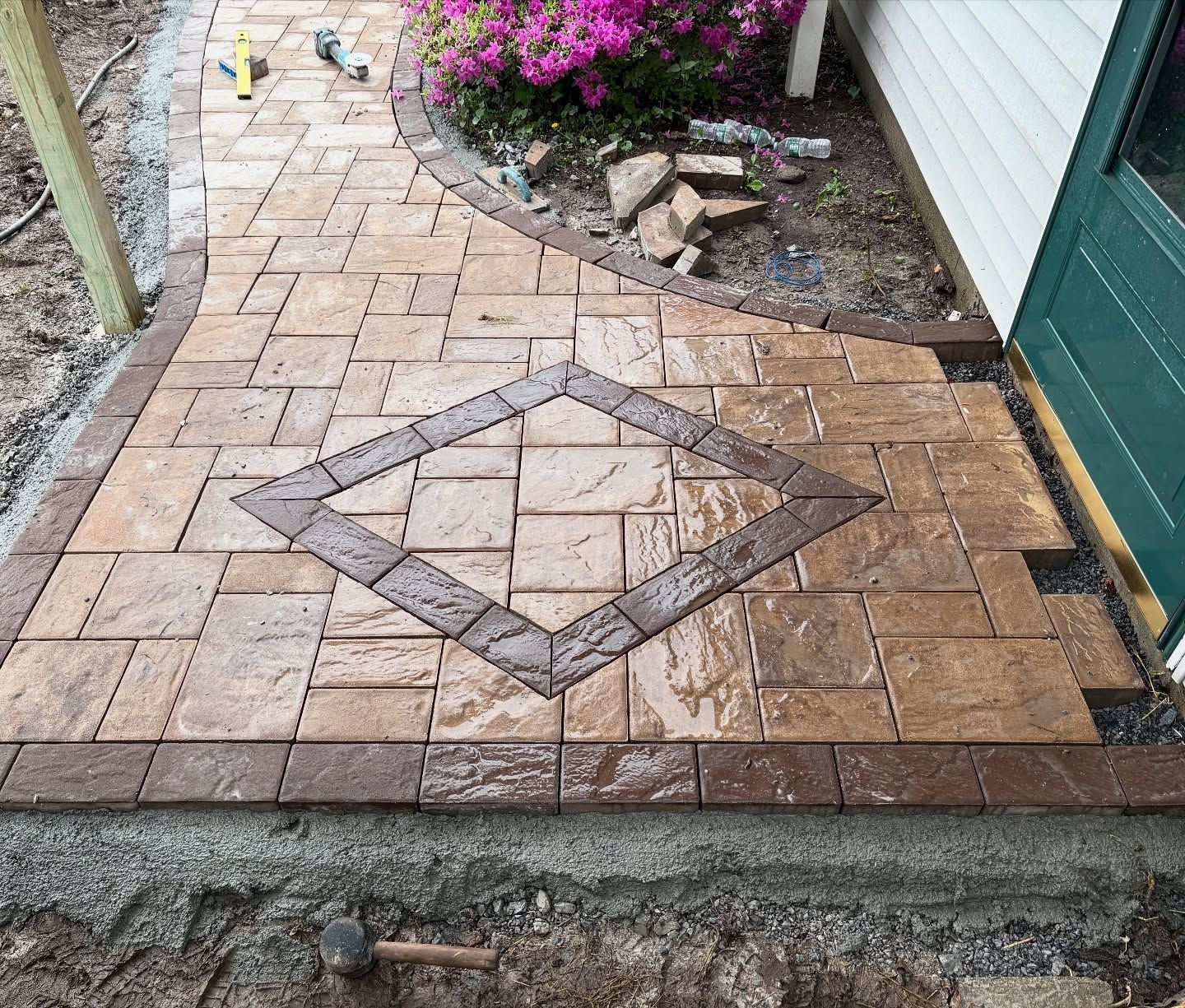
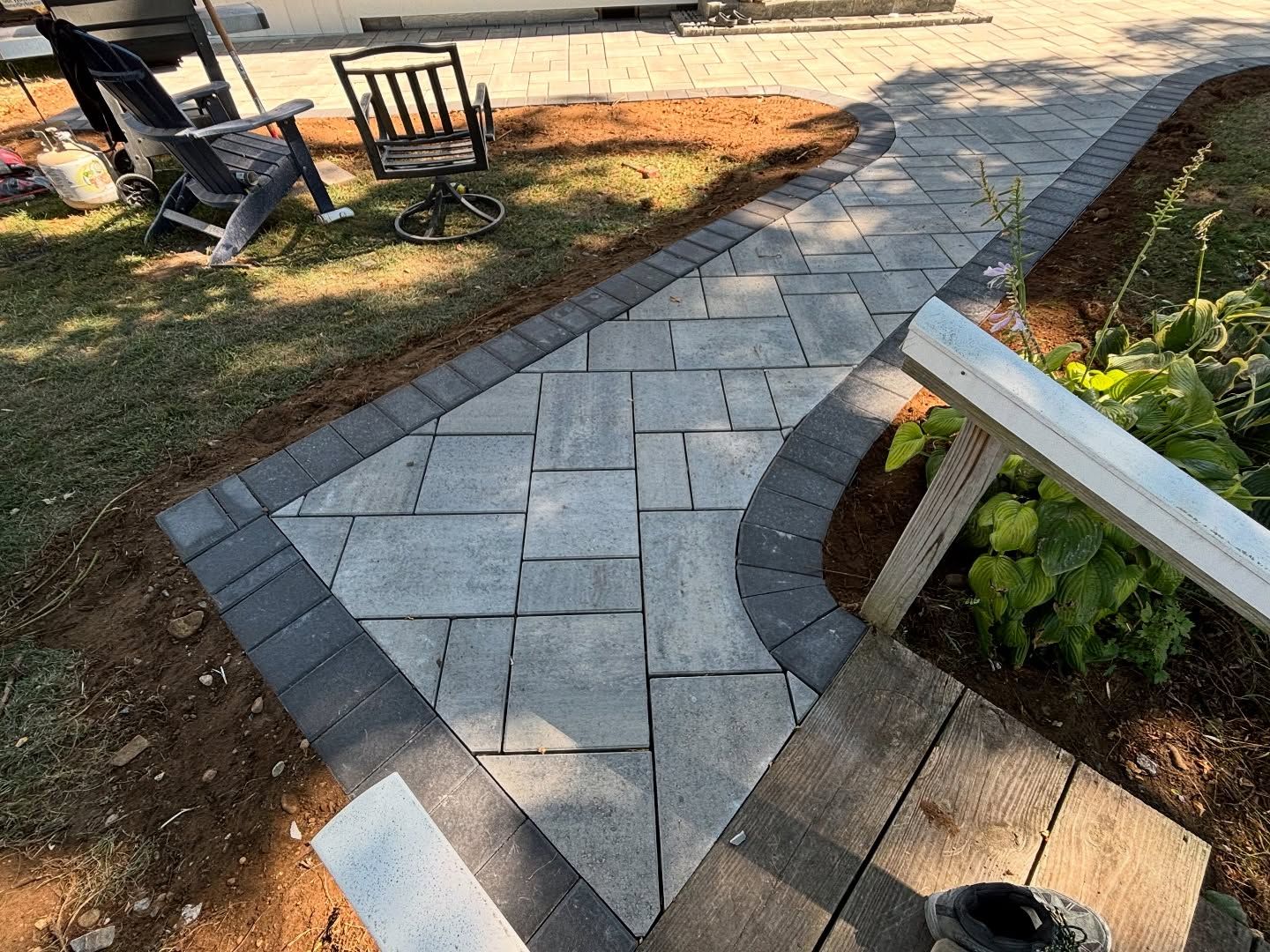
Cut bluestone or granite in consistent rectangular formats creates a contemporary, architectural look. Tight joints, linear patterns, and crisp edges give the space a polished feel without losing the warmth of natural material.
Rustic and Irregular Stone Designs
Irregular flagstone with wide, planted joints creates a naturalistic patio or path that feels like it has always been there. This style suits cottage-style homes, wooded properties, and gardens where a formal aesthetic would feel out of place.
Mixed Material Combinations
Combining two stones, such as a bluestone field with granite borders and steps, gives a project visual depth and structural logic. Different stones can be used to define zones, mark transitions, and highlight architectural features.
Multi-Level and Integrated Hardscapes
Natural stone works particularly well in multi-level designs where patios, retaining walls, steps, and walkways are all tied together with the same material palette. This creates cohesion across the entire outdoor space and makes the hardscape feel intentional rather than assembled from separate parts.
Natural Stone vs Other Patio Materials
Our full breakdown of pavers vs. bluestone vs. travertine covers the material comparison in depth. Here is a high-level summary:
Natural stone vs concrete: Concrete is cheaper upfront and faster to install, but it cracks over time and does not age as gracefully. Natural stone, properly installed, can last a lifetime and adds more to a property's character and resale value.
Natural stone vs concrete pavers: Pavers are more uniform, easier to repair, and less expensive than most natural stones. They are a strong option for budget-conscious projects. Natural stone offers a look and feel that manufactured pavers cannot fully replicate, and premium natural materials generally outlast pavers in terms of surface quality over decades.
Natural stone vs porcelain: Porcelain pavers have grown in popularity as a lower-maintenance alternative to natural stone. They are highly durable and resistant to staining, but they lack the variation and character of real stone. For homeowners who prioritize a truly natural aesthetic, porcelain is not a true substitute.
Cost Considerations for Natural Stone Projects
Natural stone projects cost more than most alternatives, and it helps to understand where that cost comes from.
Material costs vary widely by stone type, grade, thickness, and regional availability. Locally sourced stones like bluestone are generally less expensive than imported materials. Irregular formats are often cheaper per square foot than precisely cut formats, though they require more skilled labor to install.
Labor costs are a significant portion of every natural stone project, typically 40 to 60 percent of the total. Irregular stone like flagstone requires more time to fit and level than cut stone. Intricate patterns, tight joints, and custom edge work all increase labor hours.
Long-term value is where natural stone makes its strongest case. A well-installed granite or bluestone project requires minimal maintenance over 30 to 50 years. The upfront premium is spread across decades of performance, making the cost-per-year calculation much more favorable than it initially appears.
Installation Considerations That Impact Performance
The best stone in the world will fail if the installation underneath it is not done correctly. These are the factors that matter most:
- Base preparation. A compacted gravel base of four to six inches minimum is required in Connecticut's freeze-thaw climate. Insufficient base depth is the most common cause of shifting, settling, and cracking in natural stone installations.
- Drainage. Water needs a clear path away from the stone surface and the base layers. Poor drainage causes frost heave, staining, and accelerated deterioration of the base. Proper slope and drainage infrastructure are non-negotiable.
- Jointing method. Whether joints are mortared, sand-set, or planted with ground cover affects both aesthetics and performance. Mortared joints are more formal and more rigid. Sand-set joints allow for slight movement and are easier to repair. Each method suits different applications and design styles.
- Sealing. Porous stones must be sealed before use and re-sealed on a regular schedule. Skipping this step on travertine, sandstone, or limestone dramatically shortens the functional life of the installation.
- Contractor experience. Natural stone installation is a skilled trade. A contractor who primarily works with manufactured pavers does not have the same eye or technique as one who regularly works with irregular natural stone. The experience of the installation crew matters as much as the material itself.
Final Thoughts: Choosing the Right Stone for Your Project
There is no single best natural stone for every project. The right choice comes down to where the stone is going, what the Connecticut climate will put it through, how much maintenance you are willing to do, and what look you are trying to achieve.
For most patios and walkways, bluestone is the most practical, durable, and locally appropriate choice. For steps and high-traffic areas, granite is the clear front-runner. For homeowners who want a warmer, more relaxed aesthetic, flagstone and travertine are excellent options with the right installation and care.
What matters most, regardless of material, is that the base is right, the drainage is planned, and the contractor has genuine experience with the material you choose. A good stone installed poorly will fail. A modest stone installed correctly will last a generation.
Frequently Asked Questions
What is the most durable natural stone for outdoor use in Connecticut?
Granite is the most durable natural stone for outdoor use overall. It is extremely dense, nearly impervious to staining, and handles freeze-thaw cycles without issue. For patios and walkways specifically, bluestone is a close second and is often the more practical choice due to its lower cost and wide local availability.
Do all natural stone patios need to be sealed?
Not all, but most. Dense stones like granite and bluestone have low enough porosity that sealing is optional, though it does extend their life and makes cleaning easier. Porous stones like travertine, sandstone, limestone, and slate should always be sealed before use outdoors and re-sealed every one to three years depending on exposure and wear.
Can natural stone be used for steps, or is it just for flat surfaces?
Natural stone is an excellent choice for steps. Granite is the preferred material for outdoor steps because of its strength, edge stability, and slip resistance. Bluestone is also widely used for residential steps. The key is selecting a thick enough slab, typically two inches or more, and finishing the surface with a thermal or natural cleft texture rather than a polished one.
How does natural stone hold up in cold weather?
It depends on the stone. Dense, low-porosity stones like granite and bluestone handle Connecticut winters extremely well and are used throughout the Northeast for this reason. More porous stones like travertine, sandstone, and limestone are more vulnerable to freeze-thaw damage if water infiltrates the surface. Proper sealing and a well-draining base are the two most important protections against cold-weather deterioration for any natural stone.
Is natural stone harder to maintain than concrete pavers?
For most stone types, the maintenance demands are comparable to or lower than concrete pavers. Granite and bluestone require very little ongoing care. The stones that require more attention, travertine, sandstone, and limestone, need periodic sealing and prompt stain treatment. The key difference is that individual natural stone pieces are harder to replace than modular pavers if damage does occur, which is another reason proper installation and base preparation matter so much upfront.
Ready to explore natural stone options for your project?
Contact our team for a no-pressure consultation. We will walk through your site, discuss your goals, and help you find the right stone for the right application.
Recent Posts


