
Best Base Materials for a Paver Patio
Quick answer: The best base for a paver patio is a compacted layer of angular crushed stone (¾-inch minus or crusher run), topped with about one inch of coarse sand. In the Hudson Valley, that base should be roughly 6 inches deep or more and well drained to resist frost heave. The base, not the pavers, is what decides whether a patio stays flat.
At J&L Landscape Design, we build custom paver patios across Dutchess County and the Poughkeepsie area, and most paver failures we see trace back to the base, not the pavers. As a locally owned, family-run hardscape company and a Certified Unilock and Cambridge Pavers installer with in-house crews, we build our bases for our climate, so this guide reflects what works here.
In This Guide
- Why the Base Matters Most: The foundation of everything.
- The Layers of a Proper Base: Subgrade to bedding.
- The Best Base Material: Crushed stone explained.
- How Deep Should the Base Be?: Depth for our climate.
- Bedding and Joint Sand: Sand's real role.
- Common Base Mistakes: What causes failure.
- Do You Need Landscape Fabric?: Where it helps.
- Can You Lay Pavers Over Concrete?: The short answer.
- What a Patio and Base Cost: Real installed ranges.
- Frequently Asked Questions: Quick answers.
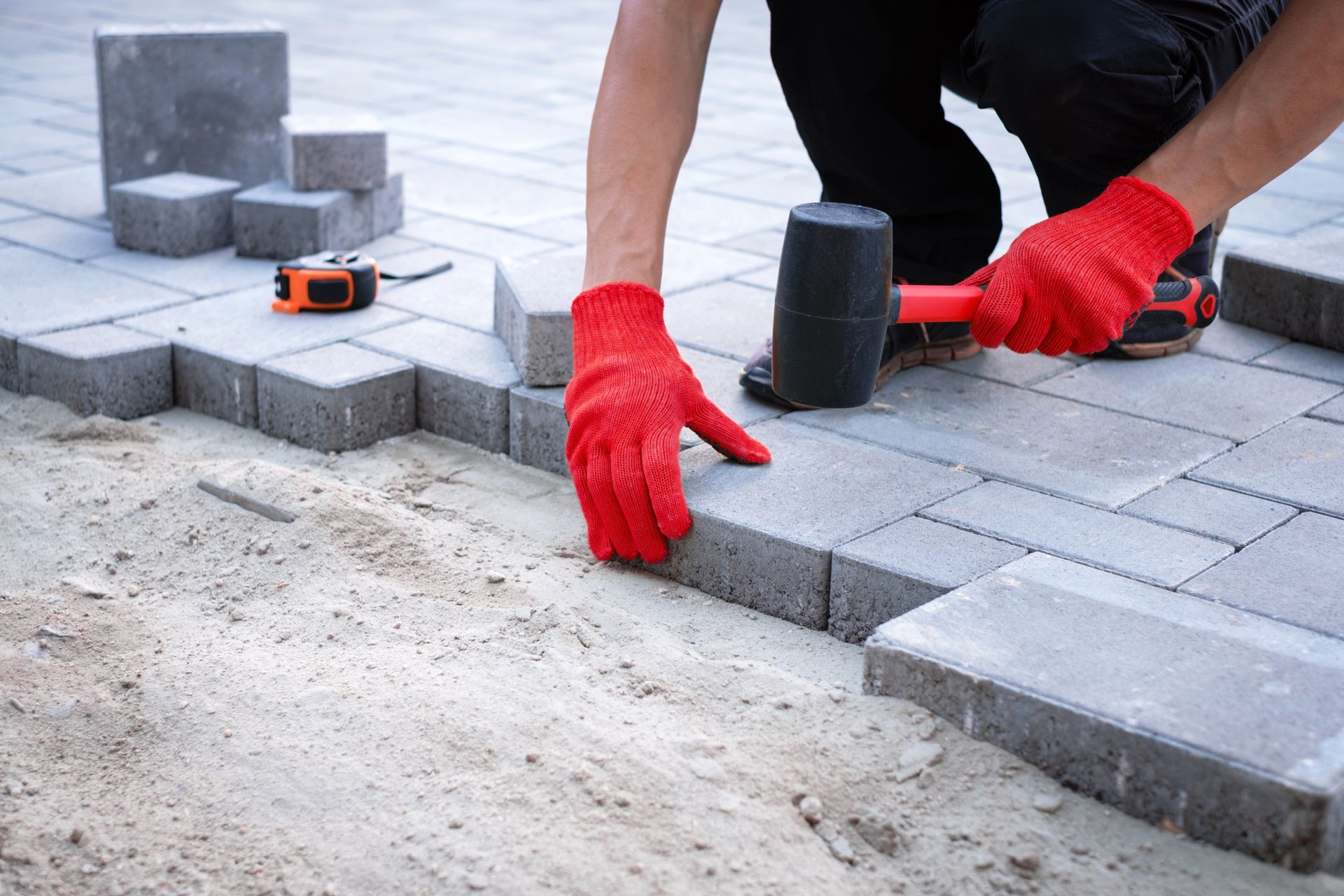
Why the Base Matters Most
Most paver patio failures come from the base beneath the pavers, not the pavers themselves. A patio is only as good as what it sits on, and a well-built base does three jobs at once: it spreads the load of the patio across the ground, it drains water away instead of letting it pool underneath, and it stays stable through freeze-thaw cycles so the surface does not heave.
Skimp on any of those and the pavers get blamed when they sink, tilt, or separate, but the real culprit is almost always a base that was too shallow, poorly compacted, or built from the wrong material. That is why professionals spend most of their effort on the part no one ever sees.
The Layers of a Proper Base
A proper base is a stack of layers, each with a job. Skipping or shortchanging any one is where problems start.
| Layer | Material | Its Job |
|---|---|---|
| Subgrade | Compacted native soil | Sloped, stable foundation |
| Base | Compacted crushed stone | Load support and drainage |
| Bedding | 1 inch coarse sand | Level seat for the pavers |
| Joints | Polymeric sand | Locks pavers, resists weeds |
The order matters because each layer depends on the one below it. Pavers cannot sit on soil or on sand alone, since neither supports weight or drains properly, and the result is sinking within a season or two. The compacted crushed-stone base does the structural work; the sand is only a thin leveling bed.
The Best Base Material
For the structural layer, one material stands out: compacted, angular crushed stone.
Ask the stone yard for a dense-graded crushed stone with a range of sizes from about ¾ inch down to fine dust. It goes by several names depending on the region:
- Three-quarter-inch minus
- Crusher run
- Quarry process (QP)
- Dense-graded aggregate (DGA)
That mix of coarse stone and fines is the key. When compacted, the fines bind the angular stone into a firm, near-solid base that carries weight and holds its shape.
Avoid rounded stone like pea gravel, which will not lock together and lets the patio shift. And never use sand as the structural base, since it cannot carry the load at all.
How Deep Should the Base Be?
Base depth is where our climate really matters, because a depth that works in a mild region is often too shallow here.
A compacted crushed-stone base of about 4 to 6 inches is a common starting point, but our freeze-thaw winters and heavy clay soils frequently call for 6 inches or more. Clay drains slowly and holds water that expands when it freezes, so more depth and better drainage protect the patio from heaving.
Two details matter as much as depth. First, compact the base in roughly 2-inch lifts, compacting each layer, since a thick layer cannot be compacted all the way through. Second, pitch the surface about a quarter inch per foot so water sheds away from your home rather than pooling.
Soil type is the wild card. Sandy soil may be fine at the shallow end, while the heavy clay common across Dutchess County calls for a deeper base. A good installer reads the soil during excavation and adjusts, which is why the same design can last decades on one lot and heave on another nearby.
How Much Base Material Do You Need?
A rough way to estimate is to multiply your patio's square footage by the base depth in feet to get cubic feet, then divide by 27 for cubic yards. A 200-square-foot patio with a 6-inch base, for example, works out to about 100 cubic feet, or just under 4 cubic yards of crushed stone before compaction.
Order a little extra, since the stone compacts down and some is always lost in handling. Because delivered stone is sold by the ton or cubic yard and yields vary by product, most homeowners have the supplier or installer confirm the quantity once the depth and area are set.
Bedding and Joint Sand
Sand plays two specific, limited roles, and confusing them causes trouble. Sand is a helper, never the foundation.
Bedding sand is a thin one-inch layer of coarse concrete sand screeded smooth on top of the compacted gravel base, giving the pavers a level surface to seat into. Use sharp, angular concrete sand, not fine play sand or round beach sand, and screed it but do not compact it, so it stays loose enough to seat the pavers.
Joint sand is different. After the pavers are laid, polymeric sand is swept into the gaps, where it hardens to lock the pavers together and resist weeds and washout.
Neither is a substitute for a proper gravel base. Using sand as the main foundation is one of the surest ways to end up with a sunken, uneven patio.
Common Base Mistakes
Because the base is hidden once the patio is finished, mistakes are easy to make and hard to spot until things fail. The common ones:
- Too little base depth, leaving the patio without enough support.
- Skipping compaction or not compacting in lifts, so the base settles unevenly.
- The wrong material, like pea gravel or sand used as the base.
- No slope for drainage, trapping water that pools, freezes, and heaves.
- Laying pavers directly on soil or sand, which all but guarantees shifting.
The thread connecting all of them is that the base is where corners get cut and where patios fail. Proper excavation, the right material, thorough compaction, and drainage are what make everything above last.
Do You Need Landscape Fabric?
This is a common question, and the answer is nuanced. A geotextile fabric is not required on every patio, but it earns its place in specific situations.
Fabric helps most when your subgrade is soft, silty, or clay-heavy, where it acts as a separator that keeps the base stone from sinking into and mixing with the soil below. That separation preserves the base and its drainage over time. On firm, well-draining subgrade, it is often optional.
The key is which fabric and where. A woven geotextile goes between the subgrade and the base stone as a separator, never in place of proper compaction or depth. It is a supporting player, not a shortcut, and on our clay soils it is frequently worth including.
Can You Lay Pavers Over Concrete?
Yes, in some cases, but only if the existing slab is sound. Pavers can be set over a concrete patio that is solid, level, and drains well, either with a mortar bond or a thin bedding layer.
The catch is that a cracked, heaving, or poorly draining slab will pass its problems straight up to the new pavers, so laying over bad concrete just hides a failure that will return. Water also has to be able to escape, or it will freeze and lift the pavers.
In most cases, especially with an older or damaged slab, removing it and building a proper crushed-stone base gives a longer-lasting result. It is worth having the slab assessed before deciding.
What a Patio and Base Cost
The base is hidden, so its cost is easy to underestimate, but it is a real part of the budget. The figures below are general installed ranges from current industry cost guides, with the Northeast trending higher because of labor rates and the deeper, better-drained base our winters need. Ballparks, not quotes:
- Concrete paver patio: about $15 to $40 per square foot installed.
- Bluestone patio: about $16 to $35 per square foot installed.
- Compacted crushed-stone base: roughly $2 to $5 per square foot.
- Crushed stone (material): about $10 to $50 per ton delivered.
What moves a quote most are the base and site variables: how much excavation the soil needs, how deep the base must go, whether an old patio must be removed, and how much grading the yard needs. That is why two patios of the same size can be priced very differently, and why the cheapest bid often hides a thinner base that will not last. For pricing on your project in Dutchess County, we give a clear, itemized estimate.
Build Your Patio on a Base That Lasts With J&L
A beautiful paver patio starts with a base built for our Hudson Valley climate: compacted crushed stone at the right depth with proper drainage. For custom paver patios across Dutchess County, J&L Landscape Design builds it right from the ground up.
Call J&L Landscape Design at (845) 309-7650 or
contact us online for a free estimate. Serving Poughkeepsie and Dutchess County. Explore our
patio and
walkway installation services.
Frequently Asked Questions
What is the best base material for a paver patio?
Compacted, angular crushed stone, sold as three-quarter-inch minus, crusher run, or dense-graded aggregate. Its mix of coarse stone and fine dust binds together when compacted into a firm, well-draining base. A thin one-inch layer of coarse sand goes on top only as a leveling bed, never as the main base.
How deep should a paver patio base be?
About 4 to 6 inches of compacted crushed stone is typical, but the Hudson Valley's freeze-thaw and clay soils often call for 6 inches or more. Compact the base in 2-inch lifts and slope it about a quarter inch per foot for drainage. Deeper, well-compacted, well-drained bases resist frost heave best.
Can I lay pavers on just sand?
No. Sand cannot support weight or drain properly, so pavers on sand alone sink and shift, often within the first year. Sand belongs only as a one-inch leveling bed over a compacted crushed-stone base, with polymeric sand in the joints. The gravel base does the structural work.
Why do paver patios sink or heave?
Almost always a base problem: too little depth, poor compaction, the wrong material, or bad drainage. In our climate, water trapped under the pavers freezes and expands, heaving the surface. A properly excavated, compacted, and sloped crushed-stone base is what prevents it.
What kind of sand goes under pavers?
Use coarse concrete sand, which has sharp, angular grains that lock together in a stable one-inch bedding layer over the gravel base. Avoid fine play sand and round beach sand. For the joints between pavers, polymeric sand is swept in after installation to harden, lock the pavers, and resist weeds.
Recent Posts