
How to Choose the Best Material for Your Walkway
Quick answer: The best walkway material for a Hudson Valley home is usually concrete pavers for value and cold-climate durability, or bluestone if you want premium natural stone that thrives in our freeze-thaw winters. Flagstone suits a rustic look, and poured concrete fits tight budgets. The right pick depends on your budget, your home's style, and how the path will be used.
At J&L Landscape Design, we design and build custom walkways across Dutchess County and the Poughkeepsie area using pavers, bluestone, and natural stone. As a locally owned, family-run hardscape company and a Certified Unilock and Cambridge Pavers installer with in-house crews, we install these materials in real Hudson Valley conditions, so this guide reflects what holds up here.
In This Guide
- What Matters When Choosing: The factors that count.
- Concrete Pavers: The versatile all-rounder.
- Bluestone: The Northeast classic.
- Flagstone: The natural, rustic look.
- Poured Concrete and Gravel: Budget options.
- Which Is Right for You: Matching material to goals.
- What a Walkway Costs: Real installed ranges.
- Layout and Base: What makes it last.
- Maintenance and Lifespan: Upkeep by material.
- Frequently Asked Questions: Quick answers.
What Matters When Choosing
The right walkway material comes down to five factors, and they pull against each other. Weigh them in order of what matters most to you:
- Cost: Both material and labor, which vary widely by choice.
- Durability: Especially freeze-thaw resistance, which matters most in our climate.
- Appearance: How well it fits your home and boosts curb appeal.
- Maintenance: Sealing, weeding, and re-leveling over the years.
- Safety: Slip resistance when the path is wet or icy.
In the Hudson Valley, durability deserves extra weight. A walkway here faces repeated freezing and thawing that cracks porous materials and heaves anything set on a poor base.
Where the walkway goes matters too. A front walkway is high-visibility and worth investing in for curb appeal, while a utility path to a shed can use a simpler, cheaper material.
Concrete Pavers
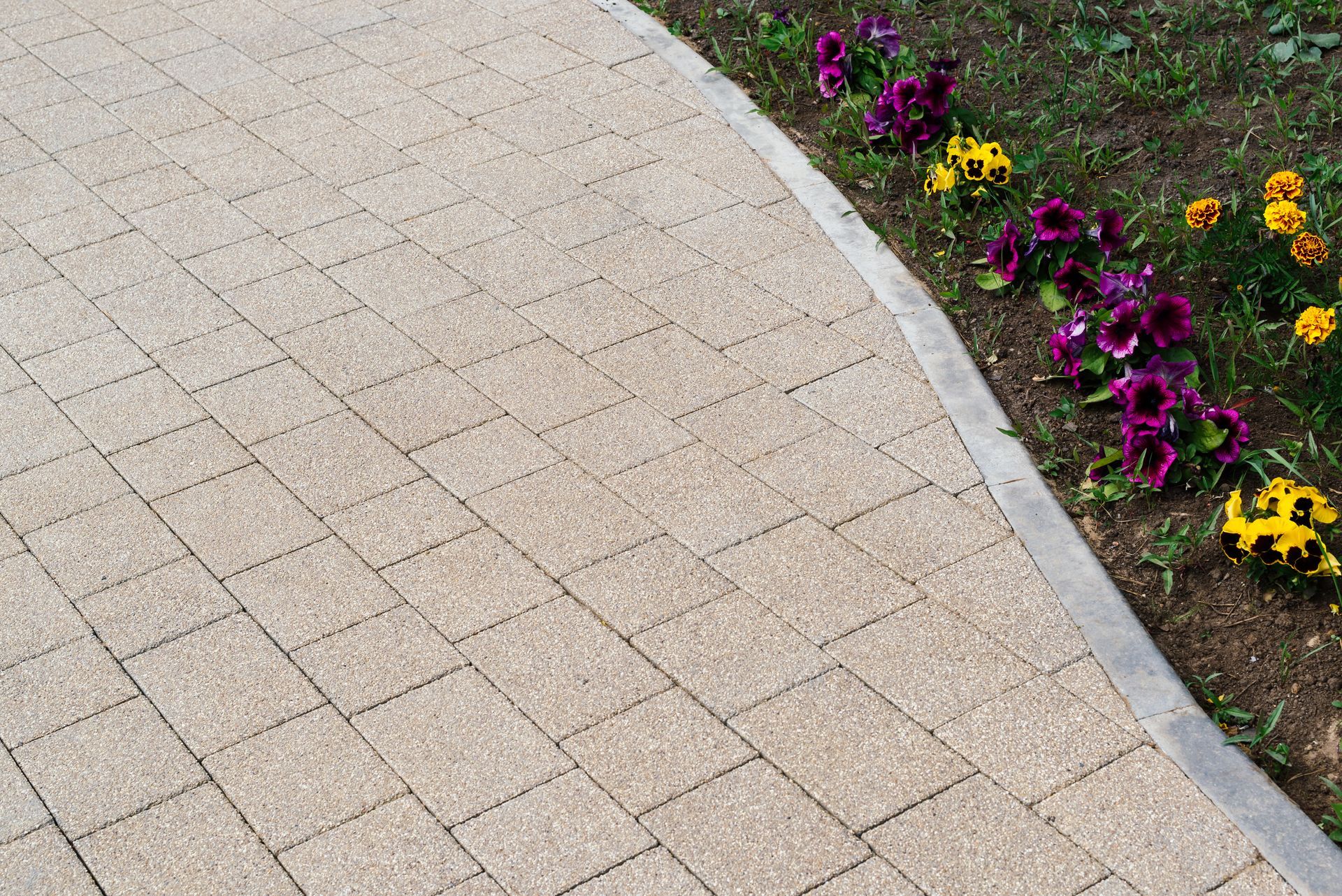
Concrete pavers are the most popular walkway material for most Hudson Valley homes, offering the widest range of looks at a moderate price with strong cold-climate performance.
Because they are manufactured, pavers come in many colors, shapes, and textures, including options that mimic natural stone or brick. They are engineered for freeze-thaw, and because they sit as individual units on a flexible base, they move with the ground instead of cracking. A damaged paver can be lifted and replaced without disturbing the rest.
The tradeoffs are minor. Lower-grade pavers can fade after years of UV exposure, and a poorly built base may need occasional re-leveling. Quality lines like Unilock and Cambridge on a proper base largely avoid both, which is why we install them. See our
walkway installation page for the service itself.
Bluestone
Bluestone is the classic Northeast walkway material, prized for a timeless look and exceptional durability in exactly our climate.
It is a dense natural stone quarried in the Northeast, and that density is the point: it resists moisture and stands up to freeze-thaw better than most natural stone. It comes in a natural cleft finish with subtle blues, grays, and earth tones, and it is naturally slip-resistant, which is a real safety advantage on a path.
The tradeoffs are cost and heat. Bluestone sits at the higher end of the price range, and darker bluestone gets hot underfoot in direct summer sun. For a front walkway where curb appeal and longevity lead, it is hard to beat here.
Flagstone
Flagstone gives the most natural, organic look of any walkway material, making it the pick for a soft, rustic path rather than a crisp, uniform one.
The term covers flat natural stones, including bluestone, slate, limestone, and sandstone, laid in irregular shapes that fit together like a puzzle. That irregularity is its charm and suits gardens and naturalistic landscapes.
Two cautions matter in our climate. Avoid porous stone, since some sandstone cracks and flakes after repeated freezing, so choose a dense variety here. And expect higher labor, because fitting irregular pieces takes more time and skill than uniform pavers, which raises the cost.
Set on the right base with the right stone, flagstone makes a beautiful, durable path.
Poured Concrete and Gravel
At the budget end sit poured concrete and gravel. Neither is as refined as pavers or stone, but each has a legitimate place.
Poured concrete is inexpensive and gives a smooth, solid surface that is easy to walk on, which can matter for accessibility. Its weakness is our winters: a solid slab cannot flex, so it is prone to cracking as the ground freezes and shifts.
Gravel paths are the cheapest option and drain well, but they need occasional replenishing, are harder to walk on, and are awkward to shovel. Both can be dressed up, but for a lasting walkway here, most homeowners are happier investing in pavers or stone.
Which Is Right for You
Match the material to your top priority. This side-by-side brings the main tradeoffs into focus:
| Material | Best For | Keep in Mind |
|---|---|---|
| Concrete pavers | Versatility and value in cold climates | Lower grades can fade over time |
| Bluestone | A durable, classic Northeast look | Higher cost; dark stone gets warm |
| Poured concrete | Tight budgets and smooth footing | Prone to cracking with freeze-thaw |
In short: concrete pavers are the value choice for most Hudson Valley walkways, bluestone is the premium natural-stone pick, flagstone suits a rustic look, and poured concrete or gravel serve tight budgets with tradeoffs.
What a Walkway Costs
There is no single price for a walkway, but real market ranges help you budget. The figures below are general installed ranges (labor and materials) from current industry cost guides, with the Northeast trending toward the high end because of our labor rates and the deeper base our winters require. Treat them as ballparks, not quotes.
- Poured concrete: about $6 to $12 per square foot installed.
- Concrete pavers: about $13 to $27 per square foot installed.
- Flagstone: about $15 to $32 per square foot installed.
- Bluestone: about $16 to $35 per square foot installed.
A few extras shift the total: decorative edging runs about $5 to $18 per linear foot, sealing about $2 to $4 per square foot, and stone steps add a few hundred dollars each. The biggest driver, though, is scope, the excavation, grading, and base work done before a single stone is set. For pricing on your project in Dutchess County, we give a clear, itemized estimate.
Layout and Base
The material is only half the job. How a walkway is laid out and what it sits on decide whether it still looks right in five years.
How Wide Should a Walkway Be?
Width is the layout question homeowners ask most, and the answer depends on how the path is used:
- 36 inches (3 feet): the practical minimum for a main walkway, enough for one person comfortably.
- 48 inches (4 feet): lets two people walk side by side, ideal for a front entry path.
- 24 to 30 inches: fine for a secondary or garden path where traffic is light.
A path that pinches too narrow feels like an afterthought, so err wider on the routes people use most. Beyond width, a good walkway follows the line people already walk and connects cleanly to the house, driveway, and patio.
Why the Base Decides Everything
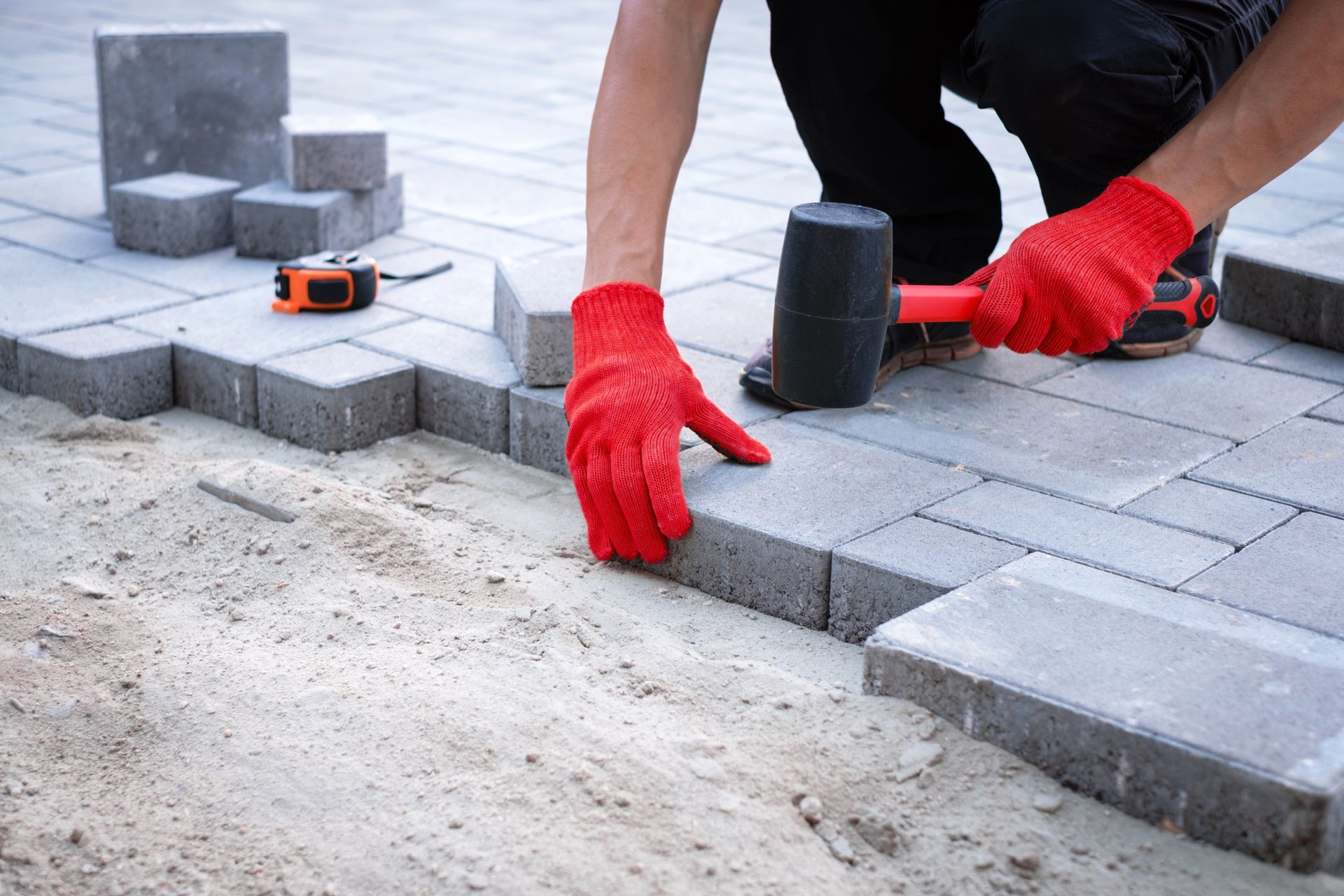
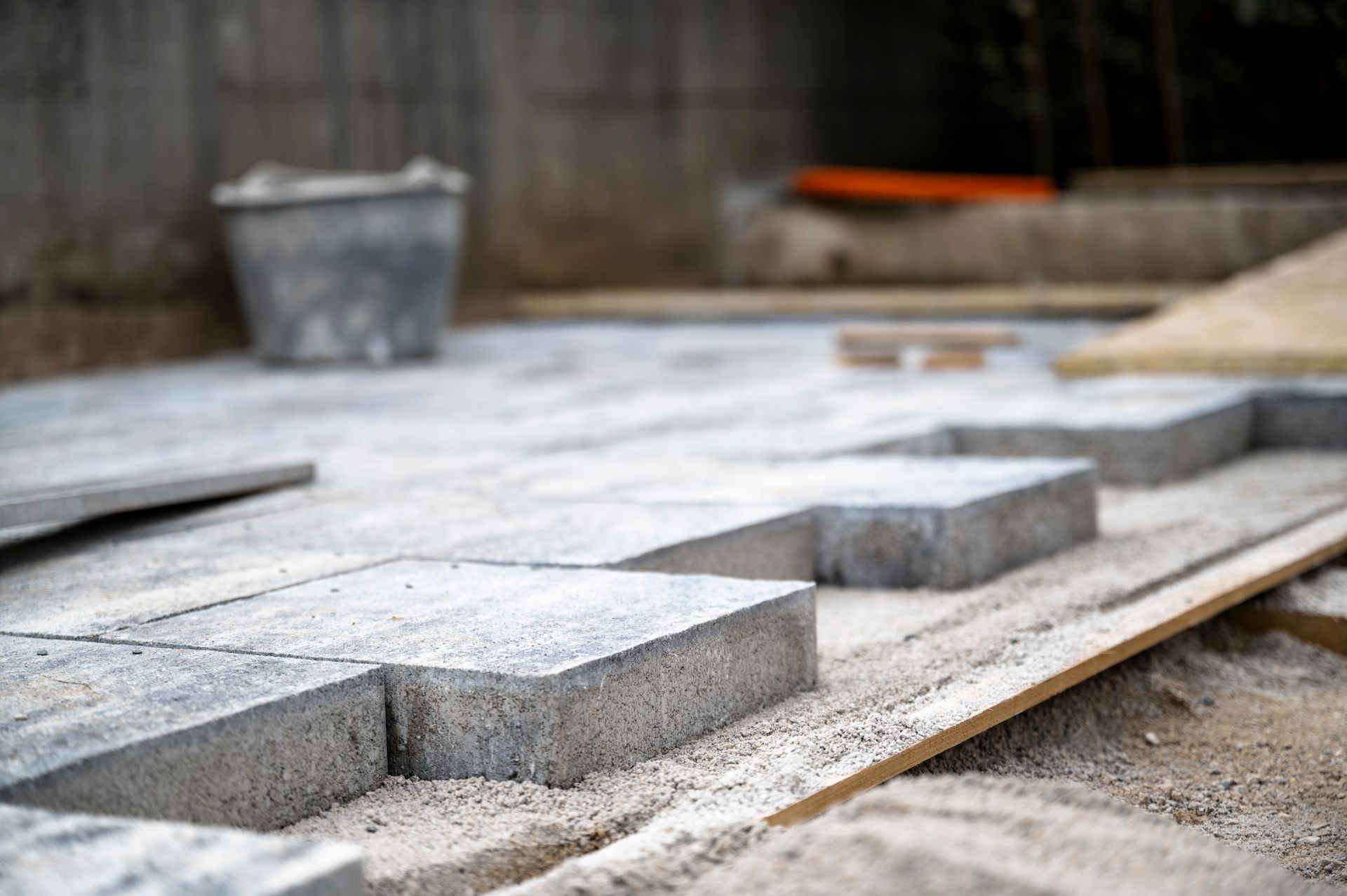
Whatever the surface material, a walkway here needs a properly excavated, compacted gravel base that drains water and stays stable. Set pavers or stone on bare soil or a thin base, and freeze-thaw will heave and separate them within a season or two.
Drainage is part of this too. On a low or soggy spot, permeable pavers set on an open-graded stone base let water pass through instead of pooling and refreezing, which is a smart option in parts of the Hudson Valley that hold water. Either way, base and layout are part of the job, not an afterthought, which is why a professional install tends to outlast a rushed one.
Maintenance and Lifespan
How much upkeep a walkway needs, and how long it lasts, varies by material, and it is worth knowing before you choose.
Concrete pavers ask for the least thought: an occasional rinse, re-sweeping polymeric joint sand every few years, and lifting a settled paver if needed. Installed well, they last decades, and individual units are easy to replace. Weeds in the joints, a common gripe, are largely solved by polymeric sand rather than ordinary sand.
Bluestone and dense flagstone are also long-lived, often lasting a lifetime, and mainly need the joints kept clear and occasional sealing if you want to deepen the color. Sealing is optional rather than required, and it also helps repel stains on a high-traffic front walkway. Poured concrete needs the least routine care but has the shortest practical life here, since freeze-thaw cracking eventually shows and a cracked slab is hard to repair invisibly.
Across every material, the real determinant of lifespan is the base. A quality surface on a poor base fails early, while even a modest material on a proper, well-drained base lasts far longer, which is the single most important thing to get right when you invest in a walkway.
Build a Walkway That Lasts With J&L Landscape Design
The best walkway material is the one matched to your home, your budget, and our Hudson Valley climate, and installed on a base built for freeze and thaw. For custom walkways across Dutchess County, J&L Landscape Design is ready to help.
Call J&L Landscape Design at (845) 309-7650 or
contact us online for a free estimate. Serving Poughkeepsie and Dutchess County. Explore our
walkway and
patio installation services.
Frequently Asked Questions
What is the best material for a walkway?
For most Hudson Valley homes, concrete pavers offer the best balance of cost, durability, and design flexibility, and they handle freeze-thaw well. Bluestone is the top natural-stone choice for a premium look that also thrives in our climate. The best material depends on your budget, your home's style, and how the walkway will be used.
What is the most durable walkway material for cold climates?
Bluestone and concrete pavers both excel in the cold. Bluestone is dense and quarried in the Northeast, so it resists moisture and freeze-thaw, while concrete pavers are engineered for the same conditions and flex on a proper base. Avoid porous flagstone like some sandstone where freezing is frequent.
Are pavers or natural stone better for a walkway?
Both are excellent; it comes down to look, budget, and maintenance. Pavers offer more color and pattern options, uniform sizing, easy repairs, and lower cost. Natural stone like bluestone offers a one-of-a-kind, high-end look and long life at a higher price.
How much does a walkway cost?
Installed ranges run roughly $6 to $12 per square foot for poured concrete, $13 to $27 for concrete pavers, $15 to $32 for flagstone, and $16 to $35 for bluestone. Site conditions, length, and base work move the final number, so an on-site estimate is the most reliable figure.
Why does the walkway base matter so much?
The base keeps a walkway level through freeze-thaw winters. A properly excavated, compacted gravel base drains water and gives the surface a stable foundation that resists heaving and sinking. Even the best material will shift or crack on a poor base, which is why professional base prep is essential here.
Recent Posts