
How to Plan a Backyard Patio Layout That Actually Works
After years of designing and building patios across all kinds of yards, we have learned that the difference between a patio you love and one you barely use comes down to layout. The materials matter. The size matters. But how you plan the space, where it sits in the yard, and how it connects to your daily life is what makes a patio actually work. We have walked yards where beautiful patios sat empty because they were in the wrong spot, the wrong size, or shaped in a way that did not fit how the family lived. This guide shares what we have learned in the field so you can plan a backyard patio layout that gets used every day, not just on the weekends.
Start With How You Want to Use the Patio
Before you pick a shape, a size, or a material, decide what you actually want to do on the patio. The use comes first. Everything else is built around it.
Dining, Lounging, Entertaining, or Everyday Relaxing
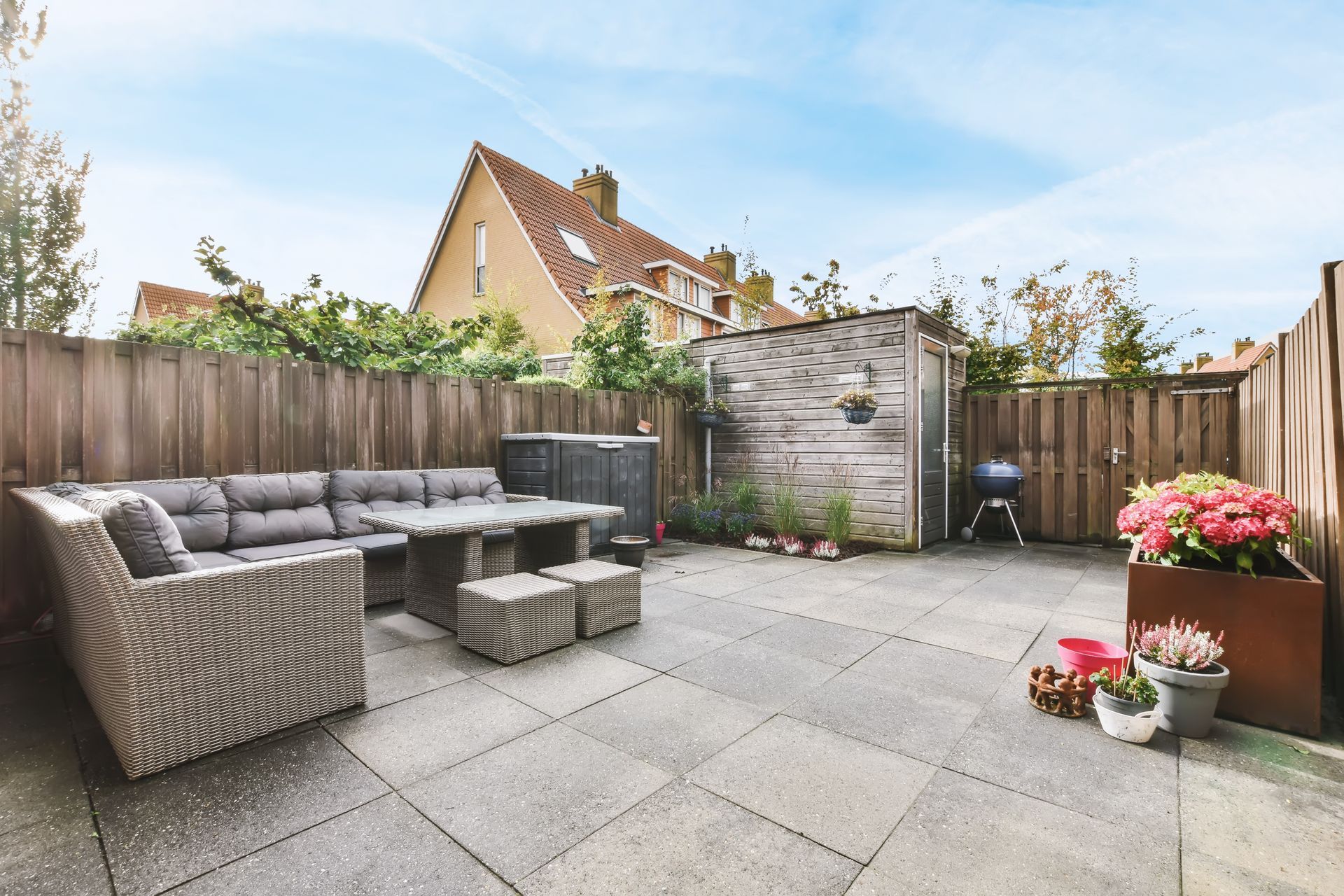
Different uses need different layouts. A dining patio needs room for a table, chairs that pull out, and a path around the table. A lounge patio needs space for sofas, a coffee table, and a comfortable flow. An entertaining space needs room for groups to move, often with a separate cooking or fire area.
Most homeowners want a mix of these. That is fine, but each use needs its own space. Trying to fit everything into one small square almost never works.
Planning Around Family, Guests, and Outdoor Routines
Think about who will use the patio and when. A family with young kids needs an open layout and clear sightlines from the house. A couple who hosts often needs room for 8 or 10 people without anyone feeling crammed. A gardener might want quiet seating tucked near the planting beds.
Walk through a normal week in your head. Morning coffee, weekend dinners, kids playing, summer parties. The layout should support all of it.
Choose the Best Location in Your Backyard
Where the patio sits in the yard matters as much as how big it is. The right spot makes everything easier. The wrong spot makes the patio feel awkward forever.
Sun, Shade, Wind, and Privacy
Pay attention to how the sun moves across the yard. A patio that bakes in afternoon sun gets used a lot less than one with natural shade. Most good patios get morning sun and afternoon shade, or have a shade structure planned in.
Wind matters too. If your yard catches wind from one direction, plan a screen, a wall, or plantings on that side. Privacy works the same way. Look at the windows of nearby houses and decide where you want a screen.
Access From the House, Kitchen, and Walkways
The patio should connect to the house in a way that makes sense. The most-used patios sit just outside the kitchen or main living room. Carrying food, drinks, or dishes back and forth should be easy. If the patio is far from the house, plan a clear walkway. A patio you have to hike to gets used less than one you can step out onto.
Views, Focal Points, and Existing Landscape Features
Look at what you want to see from the patio. A pretty tree, a garden bed, a pool, or just the open yard. The patio should face something you enjoy.
Existing features like big trees, slopes, or low spots also shape the location. Working with what is already there is almost always cheaper and better than fighting against it.
Decide How Much Patio Space You Actually Need
Most homeowners build patios too small. They look right on paper, then feel cramped once the furniture is in place. Plan generously.
Patio Size Based on Furniture and Function
A small dining patio for 4 people needs about 12 by 12 feet. A patio that fits a 6-person dining set needs around 14 by 16 feet. A lounge area with a sofa, two chairs, and a coffee table needs at least 10 by 12 feet. If you want both dining and lounging, plan for at least 18 by 20 feet, more if you want a fire pit or grill area too.
Leaving Room for Comfortable Movement
Furniture needs space around it. Use these spacing rules as a starting point:
- 3 feet of clear space behind chairs that pull out from a dining table
- 3 to 4 feet wide for walkways through the patio
- At least 18 inches between lounge furniture pieces
- 7 feet of clearance around a fire pit for chairs
- 2 to 3 feet of open space between zones so they feel separate
These numbers feel generous on paper but disappear quickly once real furniture is in place. Plan for the space you need, not the space that fits on a drawing.
Why Traffic Flow Matters in Patio Layout Planning
Traffic flow is the path people take across the patio. If guests have to squeeze past a chair to get to the door, the layout is wrong. If kids run through the dining area to reach the yard, the layout is wrong.
Good traffic flow keeps the active paths clear of furniture. It separates the spaces where people sit from the spaces where people walk. Plan the paths first, then place the furniture around them.
Create Zones for a More Functional Backyard Patio
A good patio is not one big square. It is a few smaller spaces that each have a job. Zoning the patio makes it feel bigger and work better. The most useful zones to plan for are:
- A dining zone with room for a table, chairs, and overhead shade
- A lounge or conversation zone with sofa-style seating
- A fire pit or fireplace zone as a focal point
- An outdoor kitchen or grill zone near the dining area
- A quiet zone for reading, coffee, or a small bistro set
Most yards do not need every zone. Pick the two or three that fit how you actually live.
Outdoor Dining Areas
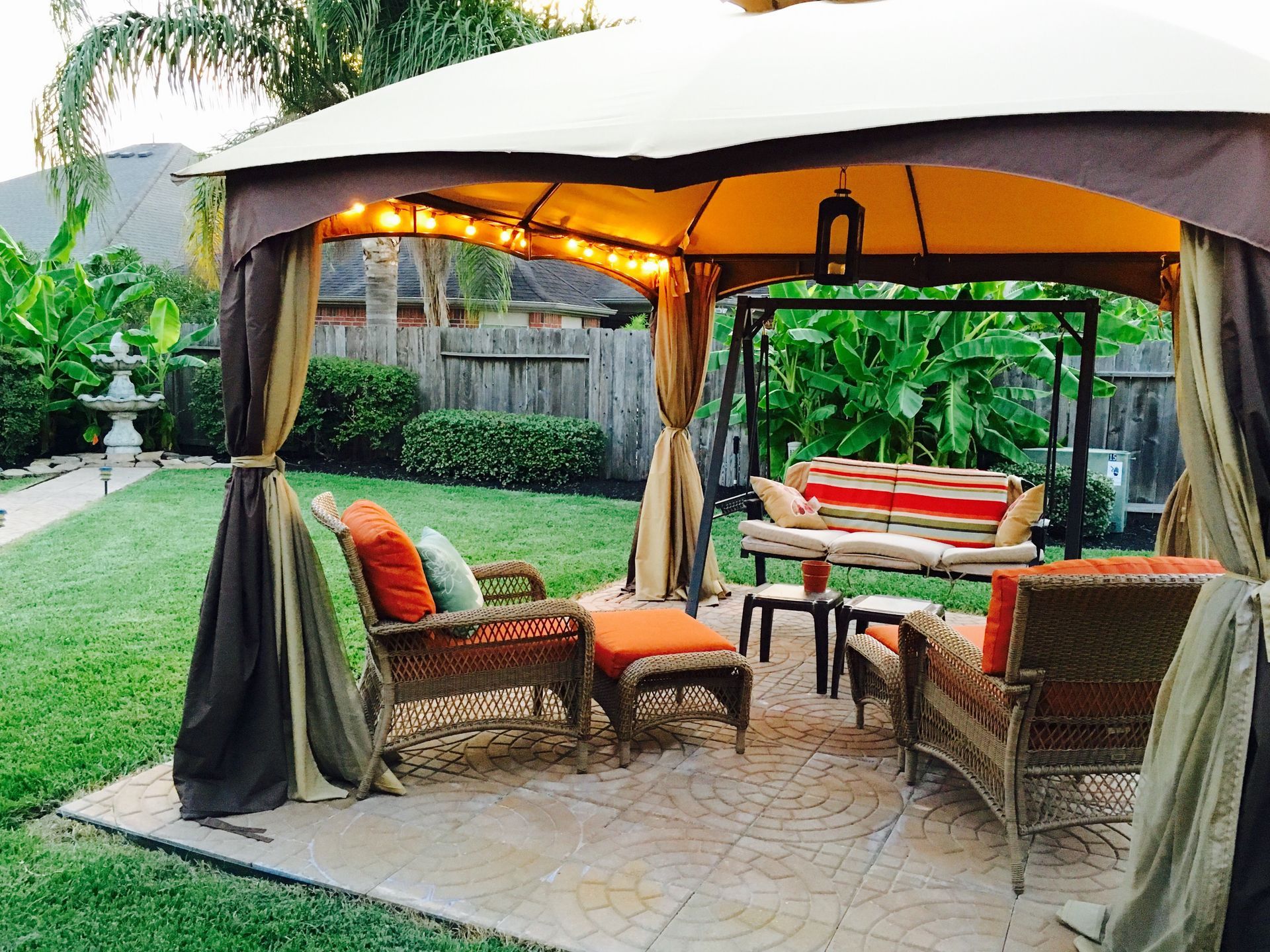
The dining zone needs a flat, open surface, room for a table and chairs, and easy access to the kitchen. A pergola, umbrella, or awning overhead helps in sunny yards.
Lounge and Conversation Spaces
Lounge zones work best a step away from the dining area. A sectional, a few chairs, and a coffee table or fire feature create a natural gathering spot. Place the furniture so people face each other, not just the yard.
Fire Pit or Fireplace Areas
A fire pit zone usually sits at the edge of the patio or just off it on its own pad. Allow at least 7 feet of clearance around the fire pit for chairs. Built-in fireplaces work as a focal point and add structure to the patio layout.
Outdoor Kitchen and Grill Zones
Grill and outdoor kitchen zones should be near the dining area but not in the main traffic path. Plan for counter space, storage, and a clear spot for the cook to work. If you are adding a full outdoor kitchen, plan for gas, water, and electric lines early.
Pick a Patio Shape That Fits the Yard
Patio shape affects how the space feels and how it flows. The right shape works with the yard, the house, and the way you plan to use the patio.
Rectangular and Square Patio Layouts
Rectangles and squares are the most common shapes. They are easy to build, easy to furnish, and work well in yards with straight lines. They pair well with traditional or modern homes and make zoning simple.
Curved and Organic Patio Designs
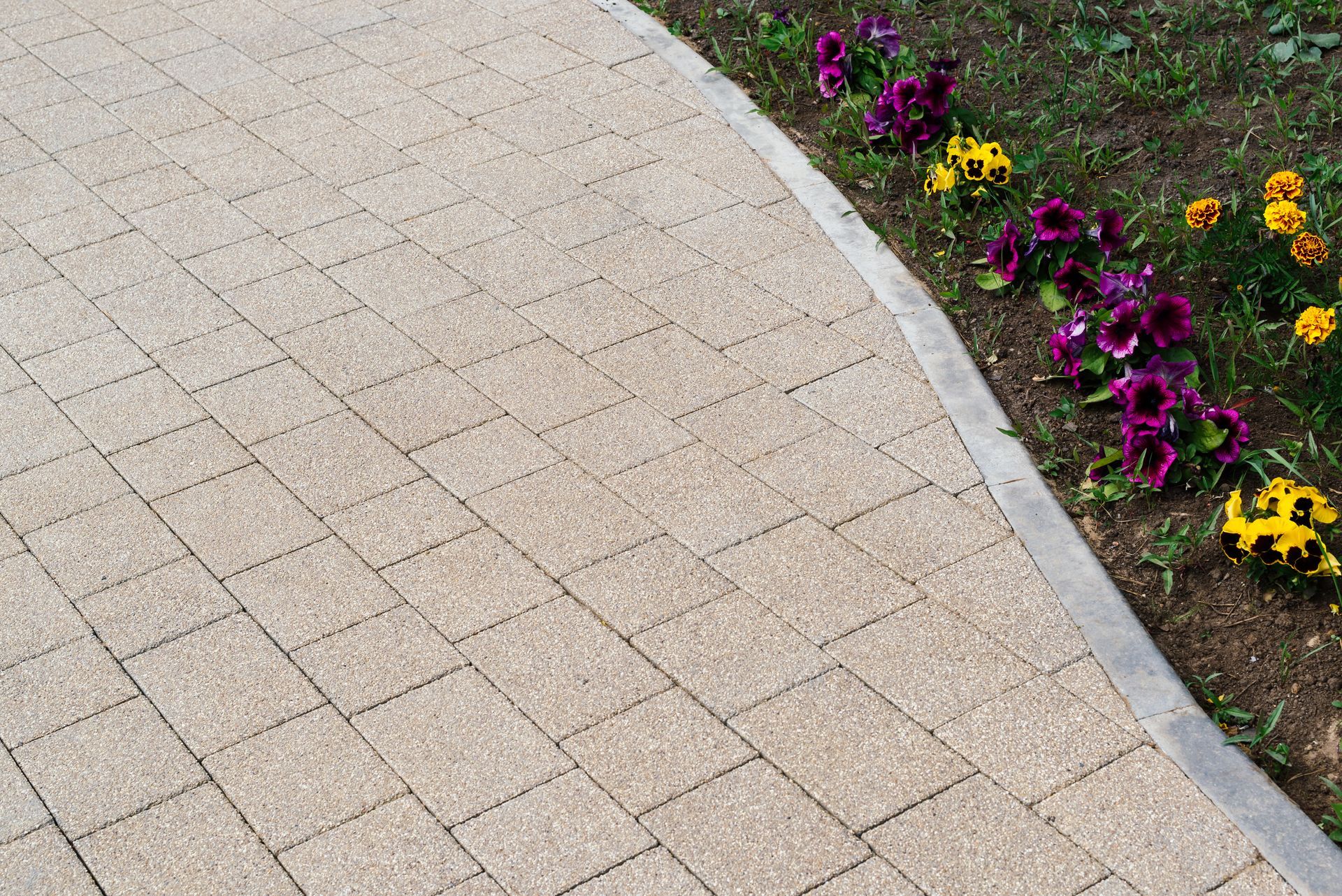
Curved patios soften the look of a yard and feel more natural in landscaped settings. They work especially well around gardens, pools, or wooded yards. Curves cost more to build because they require more cutting, but the look is worth it for the right yard.
Multi-Level or Connected Patio Areas
Sloped yards often work best with multi-level patios. A few steps between zones can separate dining from lounging or create a private corner. Connected patios with paths between them feel custom and use the yard better than one big slab.
Choose Materials That Match Your Layout and Lifestyle
Material choice changes the look, the cost, and the long-term care of the patio. Pick materials that match the layout, the climate, and how much maintenance you want to do.
Pavers, Bluestone, Travertine, and Natural Stone
Concrete pavers are the most popular choice for residential patios. They are strong, affordable, come in many colors and shapes, and last for decades. Bluestone gives a clean, classic look and works well in the Northeast. Travertine stays cool in the sun and feels great underfoot near pools. Natural stone like fieldstone or flagstone has a custom, organic look that fits curved or rustic designs.
Matching Patio Materials to Maintenance, Style, and Budget
Pavers need the least maintenance. Sweep, rinse, and reset joints every few years. Natural stone needs sealing and occasional cleaning. Travertine and bluestone fall in the middle.
Budget matters too. Pavers are usually the most affordable. Natural stone and high-end travertine cost more but add value to the home. Pick the material that fits your style and your willingness to maintain it.
Borders, Patterns, and Accent Features
Borders and patterns add character without much extra cost. A contrasting border around a paver patio frames the space. A herringbone or running bond pattern looks more custom than a basic grid. Accent features like a stone medallion or a different material around a fire pit make the patio feel designed, not just installed.
Plan the Details That Make the Patio Easier to Use
The big decisions get most of the attention, but the small details are what make a patio comfortable to use every day.
Lighting for Safety and Ambiance
Patio lighting changes how the space feels at night. Path lights along walkways add safety. String lights or pergola lights add warmth. Down lights from a wall or pergola make the patio usable for dinner. Plan the lighting before construction. Running wires through finished hardscape is much harder than planning ahead.
Drainage and Grading Considerations
A patio needs to shed water, not collect it. The surface should slope away from the house at about 1/8 to 1/4 inch per foot. Without proper grading, water pools on the patio, runs toward the foundation, or freezes in winter. If your yard has drainage problems, plan for them now.
Privacy Screens, Plantings, and Shade Structures
Privacy screens turn an open patio into a comfortable retreat. Lattice panels, trellises, or evergreen plantings all work. Shade structures like pergolas, awnings, or sail shades extend how much of the day the patio is usable. Match the screen or shade to the patio style.
Walkway Connections and Landscape Transitions
The patio should not feel like an island. A clear walkway from the house, the driveway, or the yard ties everything together. Match the walkway material to the patio or to a nearby retaining wall for a cohesive look. Soft transitions like planting beds or low garden walls help the patio blend into the rest of the landscape.
Common Patio Layout Mistakes to Avoid
We have rebuilt and redesigned patios that failed for the same handful of reasons. Watch out for these common mistakes:
- Making the patio too small for the furniture you actually want
- Putting the patio in the wrong spot for sun, shade, or access
- Ignoring traffic flow and crowding the walking paths with furniture
- Forgetting drainage and grading until water shows up
- Skipping zones and trying to fit everything into one open square
- Choosing a material that does not match the climate or maintenance you can handle
Making the Patio Too Small
This is the most common mistake by far. Homeowners measure the furniture, build a patio just big enough, and then realize they have no room to move. Always plan for the space around the furniture, not just the furniture itself.
Forgetting About Sun Exposure or Drainage
A patio that bakes in afternoon sun or pools water after rain gets used less. Plan for sun and water from day one. Both are easy to handle during design and very expensive to fix after.
Poor Flow Between the Patio, Yard, and House
A patio should feel connected to the rest of the yard. Patios that sit awkwardly between the lawn and the house never feel right. Plan walkways, plantings, and transitions that pull the spaces together.
Bring the Patio Layout Together Before You Build
The best patios are the ones that get planned carefully before the first stone goes down. A clear plan saves money, time, and frustration.
Sketching the Design Before Construction
Draw the patio on paper or in a simple design tool. Mark the zones, the furniture, the paths, and the connections to the house and yard. This is where most layout problems get caught and fixed for free.
Working With a Patio Contractor or Landscape Designer
A good patio contractor or landscape designer can spot issues you might miss. They know what sizes work, what materials hold up, and what mistakes to avoid. Bringing one in early often saves more than it costs.
Building a Patio That Looks Good and Works Long-Term
A patio is a 30-year investment. The right layout, size, and materials pay off every season for decades. The patio you use every day is the one you planned for, not the one you settled for.
Patio Planning Checklist at a Glance
| Planning Step | What to Decide | Why It Matters |
|---|---|---|
| Use | Dining, lounging, entertaining, or relaxing | Drives the size, shape, and zones |
| Location | Sun, shade, wind, and access from the house | Decides how often you actually use the patio |
| Size | Furniture, traffic flow, and zone planning | Prevents the most common mistake: building too small |
| Shape | Rectangular, curved, or multi-level | Matches the yard and the architecture |
| Material | Pavers, bluestone, travertine, or natural stone | Affects look, cost, and long-term maintenance |
| Details | Lighting, drainage, privacy, and walkways | Makes the patio comfortable to use every day |
Plan a Patio That Fits Your Backyard and Your Life
A backyard patio is one of the most-used spaces in any home, when it is planned right. The yards we have built across years of work all share the same thing: the homeowners thought about how they wanted to live before they thought about how the patio looked.
If you are starting from scratch, redesigning an existing space, or want a second opinion on a plan you already have, we are here to help. Our team will walk your yard, look at the sun, the slope, and the way your family lives, and put together a layout that actually works.
Contact us today to schedule a consultation, or take a look at our portfolio to see backyard patio designs we have built for homeowners just like you.
Frequently Asked Questions
How big should a backyard patio be?
A small patio for a bistro set or 4-person dining works at 12 by 12 feet. A standard family patio with dining and a small lounge area needs at least 16 by 18 feet. If you want dining, lounging, and a fire pit, plan for 20 by 24 feet or more. Bigger almost always works better than smaller.
Should the patio be attached to the house or freestanding?
Attached patios are easier to use because they connect directly to the kitchen or living room. Freestanding patios feel more like a destination and work well for fire pits, lounging, or quiet seating away from the house. Many of the best yards have both, connected by a walkway.
What is the most popular patio material right now?
Concrete pavers are the most popular choice for new residential patios because they are strong, affordable, and come in many styles. Bluestone and travertine are popular in higher-end designs. Natural stone is the choice for homeowners who want a custom, organic look.
Do I need a permit to build a patio?
Most towns do not require a permit for ground-level patios under a certain size, but rules vary. If you are adding a structure like a pergola, an outdoor kitchen with gas or water lines, or a raised patio, a permit is usually required. Always check your local codes before building.
How long does it take to build a backyard patio?
A standard paver patio takes about a week to build, depending on size, weather, and site conditions. Larger patios with multiple zones, custom features, or natural stone can take two to three weeks. Planning and design usually add another week or two before construction starts.
Recent Posts