
Why Do Pavers Sink? How Proper Installation Helps Prevent It
Pavers sink when the ground beneath them moves, and that almost always traces back to the base. The most common causes are a gravel base that was too thin or not compacted in layers, too much bedding sand, missing or failed edge restraints, water collecting under the pavers, and soft soil from old backfill or utility trenches. In the Hudson Valley, freeze and thaw cycles make every one of those weak points worse. You keep pavers from sinking by building the base right the first time, controlling water, and locking the edges and joints. Once pavers have sunk, the fix is to lift them, repair the base, and reset them, not to add more sand on top.
J&L Landscape Design is a family-run hardscape and masonry company based in Wappingers Falls, building patios, walkways, steps, and retaining walls across Dutchess County with in-house crews. We are Certified Unilock Installers and experienced Cambridge Pavers installers, and much of our repair work involves resetting pavers that were installed without the base our clay soils and winters demand. This guide explains why pavers sink and what proper installation looks like.
In This Guide
- How a Paver Surface Holds Up: The layers under your pavers.
- The Most Common Reasons Pavers Sink: What goes wrong.
- Why Pavers Sink More in the Hudson Valley: Clay soil and freeze-thaw.
- How Proper Installation Prevents Sinking: Base, compaction, and edges.
- Early Warning Signs of a Failing Base: What to watch for.
- Diagnosing Where Your Pavers Are Sinking: What the pattern tells you.
- How Sunken Pavers Are Fixed: Lift, repair, reset.
- Questions to Ask Before You Hire an Installer: Base, water, and warranty.
- Keeping Pavers Level Over Time: Simple habits that help.
- Frequently Asked Questions: Quick answers.
How a Paver Surface Holds Up
Pavers do not hold themselves up. They are the top layer of a system, and every layer below has a job.
The Layers
From the bottom up, a typical paver installation includes:
- Subgrade: the native soil, excavated and compacted.
- Geotextile fabric, in many cases, to separate clay soil from the gravel base.
- Base: compacted crushed stone, usually several inches deep, that carries the load.
- Bedding layer: about an inch of sand or fine stone that the pavers are set into.
- Pavers: the visible surface.
- Joint material: sand or polymeric sand between pavers that locks them together.
- Edge restraint: a border that keeps the whole field from spreading.
Where Failures Start
If any one of these layers is weak, the surface eventually shows it. In our experience, the base and the edges are responsible for most sinking problems. Our guide to
the best base material for a paver patio covers base materials in more detail.
The Most Common Reasons Pavers Sink
When we lift a sunken section, we usually find one or more of these problems underneath:
- Base too thin. A few inches of gravel may hold up a light walkway for a while but not a patio with furniture, grills, and foot traffic, and certainly not a driveway.
- Base not compacted in lifts. Gravel dumped deep and compacted only on top stays loose underneath and settles over time.
- Too much bedding sand. Bedding sand is meant to be a thin leveling layer. Thick sand shifts and compresses, creating dips.
- No edge restraint, or a failed one. Without solid edges, pavers creep outward and the field loses its interlock, which lets individual pavers drop.
- Water under the pavers. Downspouts, poor pitch, and low spots send water into the base, washing out fines and softening the soil.
- Soft fill below. Pavers built over a foundation backfill trench, an old utility trench, or a buried stump settle as that loose fill compacts or decays.
- Washed-out joints. When joint sand washes away, pavers lose their grip on each other and can rock and settle.
Most of these are installation issues, not material defects. The pavers themselves rarely fail.
Why Pavers Sink More in the Hudson Valley
Local conditions make proper installation even more important here.
Clay Soils
Much of Dutchess County has heavy, clay-rich soil. Clay holds water, drains slowly, and expands and contracts as it gets wet and dries out. Gravel placed directly on clay without separation can gradually push down into the soft soil, especially when wet.
Freeze and Thaw
When water in the soil freezes, it expands and lifts the surface. When it thaws, the ground settles back, but not always evenly. Repeated cycles each winter loosen poorly built bases and move pavers up and down. Good drainage and a properly compacted base keep water from collecting where it can freeze.
Construction on Sloped Lots
Many properties in Wappingers Falls, Fishkill, and Hopewell Junction sit on slopes. Patios built on fill to create a level area are especially prone to settling if that fill was not compacted properly. On these sites, a
retaining wall is often part of building a stable patio.
How Proper Installation Prevents Sinking
Preventing sinking comes down to doing the unseen work carefully.
Excavate to the Right Depth
The depth of the base depends on use and soil. A walkway needs less base than a patio, and a driveway needs more than either. On clay soils, we often go deeper than the minimum.
Separate the Base From Clay
Geotextile fabric between clay subgrade and the gravel base helps keep the two from mixing over time, so the base stays strong.
Compact in Layers
The base is installed in layers, each compacted with a plate compactor before the next one goes down. This is the single most important step for preventing settlement, and it is the one most often skipped by inexperienced installers.
Keep the Bedding Layer Thin
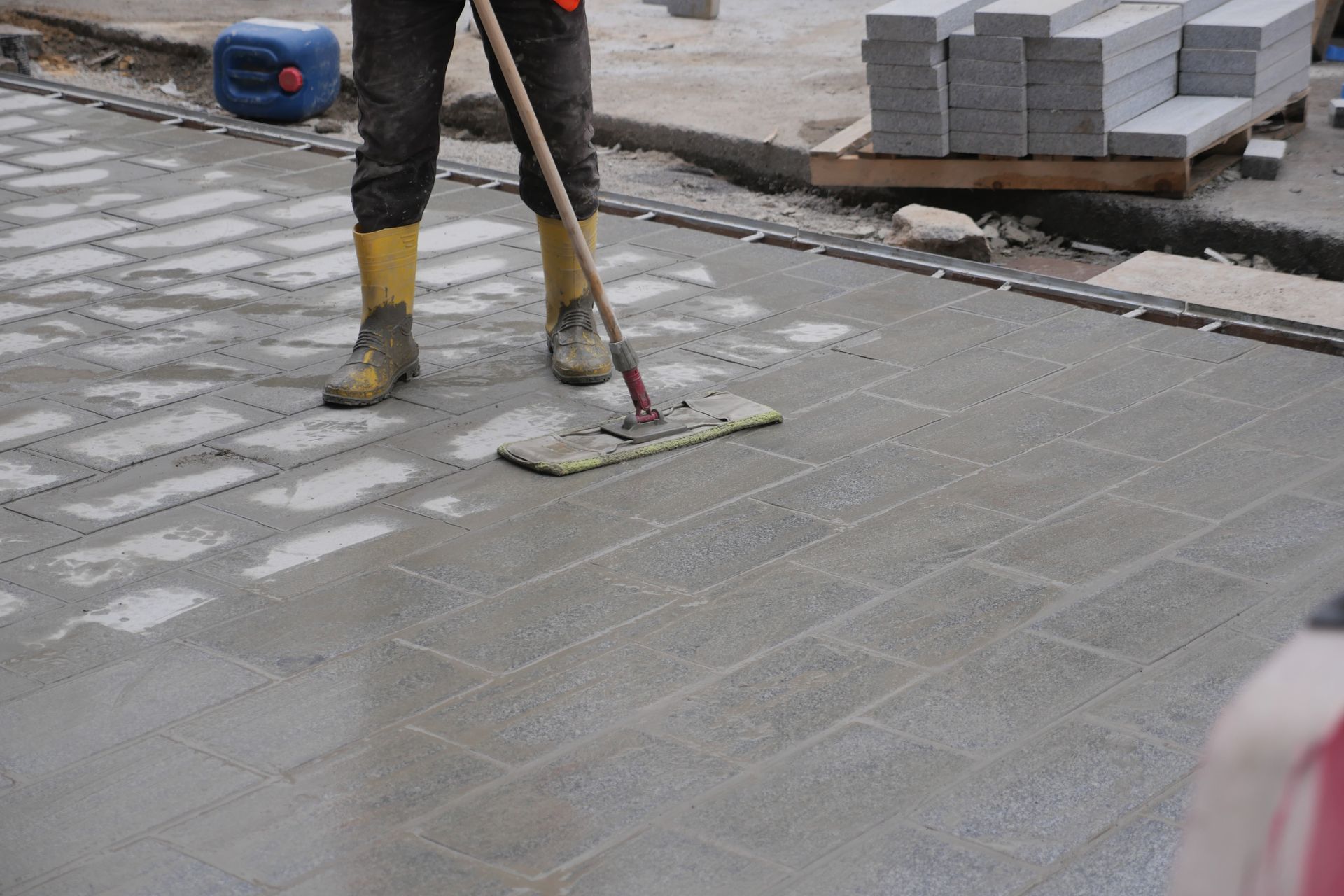
A consistent, thin bedding layer screeded to the right height lets pavers sit evenly without room to shift.
Build in Pitch and Drainage
Every patio and walkway should slope slightly away from the house so water runs off rather than soaking in. Downspouts should be directed away from the pavers or tied into drainage.
Install Strong Edge Restraints
Edge restraints or concrete edging lock the field in place and keep pavers from spreading.
Plan for Heavy Loads
Patios that will hold a hot tub, an outdoor kitchen, a stone fireplace, or vehicles need a base designed for that weight. Heavy features concentrate load in one area, and a base built for foot traffic can settle under them. We plan base depth and sometimes a concrete footing under these features before any pavers go down.
Lock the Joints
Joints are filled with sand or polymeric sand and compacted so pavers interlock. Our guide on
how long polymeric sand lasts explains how joint material holds up over time.
Early Warning Signs of a Failing Base
Sinking rarely happens all at once. Watch for these early signs, especially after the first winter or two:
- Puddles that linger on the surface after rain in spots that used to drain.
- Pavers that rock or click when you step on them.
- Widening joints or joint sand disappearing in one area.
- Pavers that sit higher or lower than their neighbors, creating a trip edge.
- Edges spreading outward into the lawn or planting beds.
- Weeds sprouting in a line, which often points to a joint opening up over a soft spot.
Catching these early usually means a small, targeted repair instead of a larger rebuild.
Diagnosing Where Your Pavers Are Sinking
Where the sinking happens usually points to the cause.
| Where Pavers Are Sinking | Likely Cause | Typical Fix |
|---|---|---|
| Along the edges | Missing or failed edge restraint | Reset edge pavers and install proper restraint |
| Next to the house | Settling foundation backfill | Remove pavers, compact or rebuild base, reset |
| Under a downspout | Water washing out the base | Redirect water, rebuild base, reset |
| In a single low spot | Soft spot, buried debris, or old trench | Excavate the area, replace with compacted base |
| In tire tracks on a driveway | Base too thin for vehicle loads | Rebuild with deeper base designed for vehicles |
| Random dips across the field | Thick bedding sand or poor compaction | Lift affected areas, correct bedding and base |
A single sunken area can often be repaired. Widespread sinking across the whole surface usually means the base was undersized and the patio needs a more complete rebuild.
How Sunken Pavers Are Fixed
The good news about pavers is that, unlike poured concrete, they can be lifted and reset.
The Repair Process
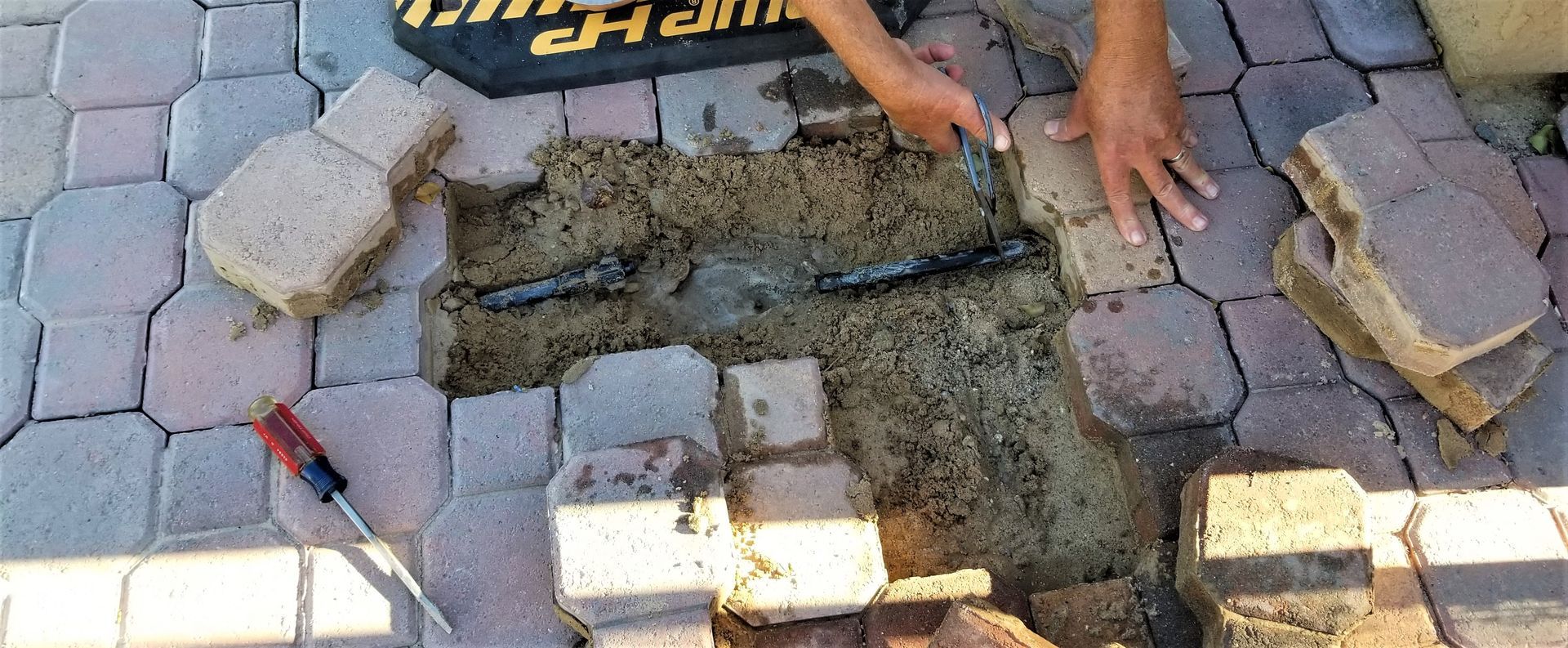
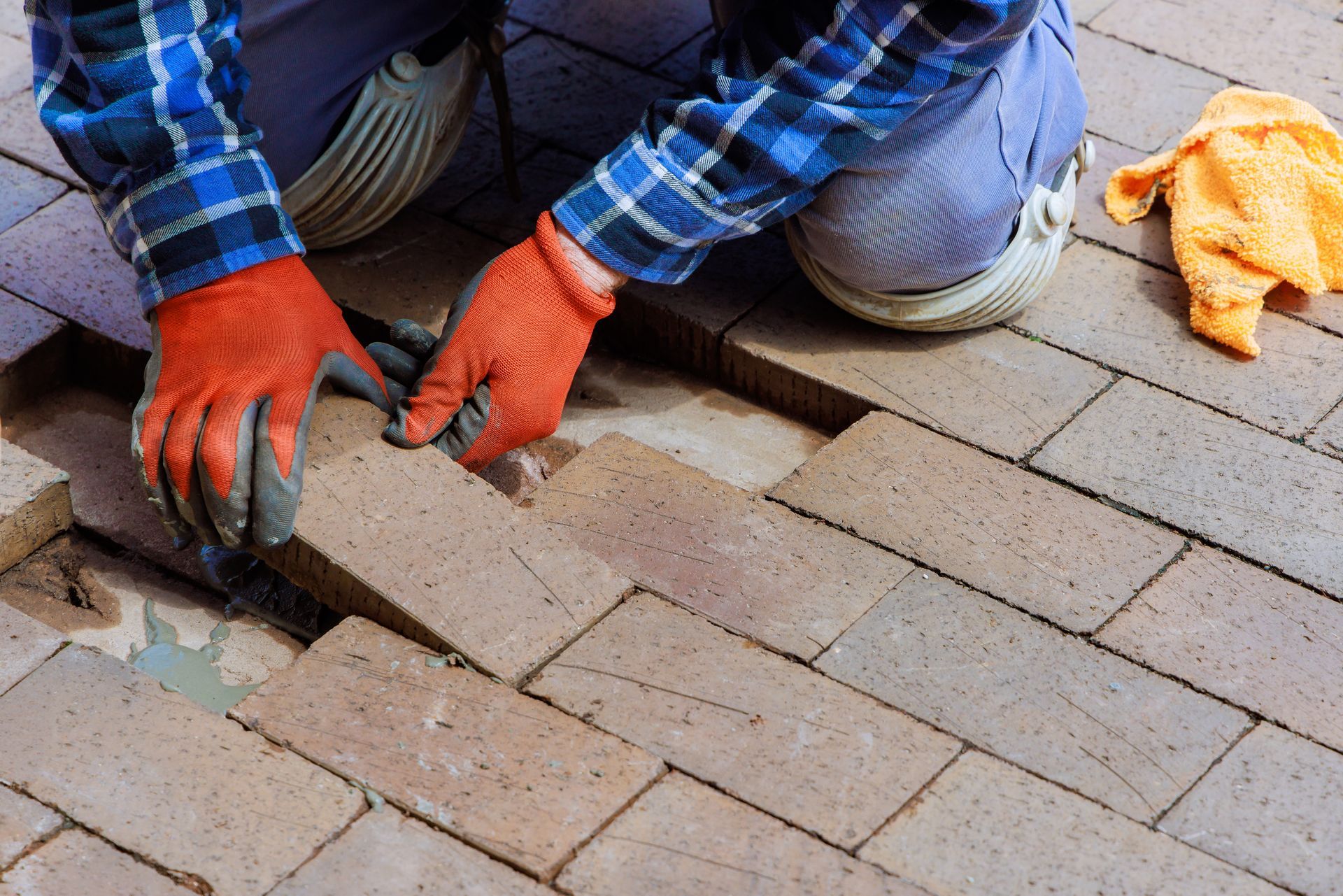
The sunken pavers are removed and set aside. The bedding layer is cleared, and the base is inspected. Soft or contaminated base material is dug out and replaced with new crushed stone, compacted in layers. Fresh bedding is screeded to the correct height, and the original pavers are reinstalled. Joints are refilled and compacted.
Why Adding Sand Does Not Work
A common quick fix is to pull up pavers and add more sand under them. This usually makes things worse, because thicker sand settles again, often faster than before. The fix has to happen in the base.
When a Rebuild Makes More Sense
If the base was undersized across the whole patio, spot repairs will keep failing. In those cases, removing the pavers, rebuilding the full base, and reinstalling, often with the original pavers, gives a lasting result. Learn more about our
paver patio installation process.
Questions to Ask Before You Hire an Installer
Because sinking is almost always an installation issue, the questions you ask before work starts matter more than the paver you pick.
About the Base
Ask how deep the installer plans to excavate for your project, what base material they use, whether they compact in layers, and whether they use geotextile fabric on clay soil. A confident answer with specific numbers for your site is a good sign. A vague answer about "plenty of gravel" is not.
About Water and Edges
Ask how the surface will be pitched, where downspout water will go, and what type of edge restraint will be installed. Ask what the warranty covers if pavers settle. As Certified Unilock Installers, we can offer Unilock certified warranty options on qualifying projects.
Keeping Pavers Level Over Time
A well-built paver surface needs little care, but a few habits help it stay level.
Manage Water
Keep downspouts pointed away from patios and walkways, and fix low areas where water collects. Water is the most common long-term threat to a paver base.
Maintain the Joints
Refill joint sand when it washes out, so pavers stay locked together. Our paver walkway maintenance checklist covers seasonal joint care, cleaning, and winter tips.
Fix Small Issues Early
A single sunken paver is a quick repair. Left alone, it lets water into the base and the problem spreads.
Consider Sealing
Sealing can help stabilize joint sand on some installations. Our guide on
whether pavers need to be sealed explains when it helps.
Talk to J&L About Sinking or New Pavers
If your patio or walkway is sinking, or you are planning a new one and want it built to last, we can take a look, explain what is happening under the surface, and give you a clear plan. Learn more about our walkway installation, browse our portfolio, or read our FAQ.
Call J&L Landscape Design at (845) 309-7650 or
contact us for a free estimate. We are based in Wappingers Falls and serve homeowners throughout Dutchess County and select parts of Orange County.
Frequently Asked Questions
Why are my pavers sinking?
Pavers usually sink because of a problem below the surface, such as a base that was too thin or not compacted properly, too much bedding sand, failed edge restraints, water collecting under the pavers, or soft fill from old trenches or foundation backfill.
Can sunken pavers be fixed?
Yes. Sunken pavers can be lifted, the base repaired and recompacted, and the same pavers reinstalled. Simply adding more sand under them usually does not last, because the problem is in the base.
How deep should the base be for pavers?
It depends on use and soil conditions. Walkways need less base than patios, and driveways need the most. On heavy clay soils like those common in Dutchess County, a deeper, well-compacted base is often needed.
Does polymeric sand stop pavers from sinking?
Polymeric sand helps keep pavers locked together and reduces joint washout, which supports stability. However, it cannot make up for a weak base. Sinking is almost always a base, drainage, or edge problem.
Why do pavers sink next to the house?
The soil next to a foundation is often backfill that was placed after the foundation was built. If it was not compacted well, it continues to settle for years, taking the pavers above it down with it.
Recent Posts