
Fire Pit vs. Outdoor Fireplace: Which Makes More Sense for Your Backyard?
A properly installed fire feature transforms a Connecticut patio from a summer-only space into a three-season gathering area. The strategic question is which feature type aligns with the yard, the budget, and the family's actual use patterns. Our team at JL Landscape installs both fire pits and outdoor fireplaces across central Connecticut, integrating them into patio designs and full hardscape projects in Hartford County. This guide outlines where each feature performs best, current installation costs, and the framework for the decision.
The Short Answer
A fire pit is the recommended choice for casual gatherings with seating on all sides, modest budgets ($1,500 to $5,000 installed), or open central patio configurations. An outdoor fireplace is the recommended choice when wind exposure is high, directional heat matters more than 360-degree access, an architectural focal point is desired, or budget supports the $8,000 to $25,000+ a proper masonry build requires. The wrong choice for any yard is the one selected on aesthetic appeal alone, without alignment to actual use patterns.
Why JL Landscape Is Qualified to Advise on Fire Features
We install both feature types across Wethersfield, Glastonbury, Cromwell, Newington, Middletown, Portland, and the surrounding central Connecticut towns. We are also engaged each year to evaluate fire features installed by other contractors, frequently within one to two seasons of installation, where smoke management, drainage, or footing failures have compromised performance. That direct exposure to both successful installations and post-installation failures across Connecticut's climate, soil conditions, and wind patterns informs the recommendations below.
Defining Differences Between Fire Pits and Outdoor Fireplaces
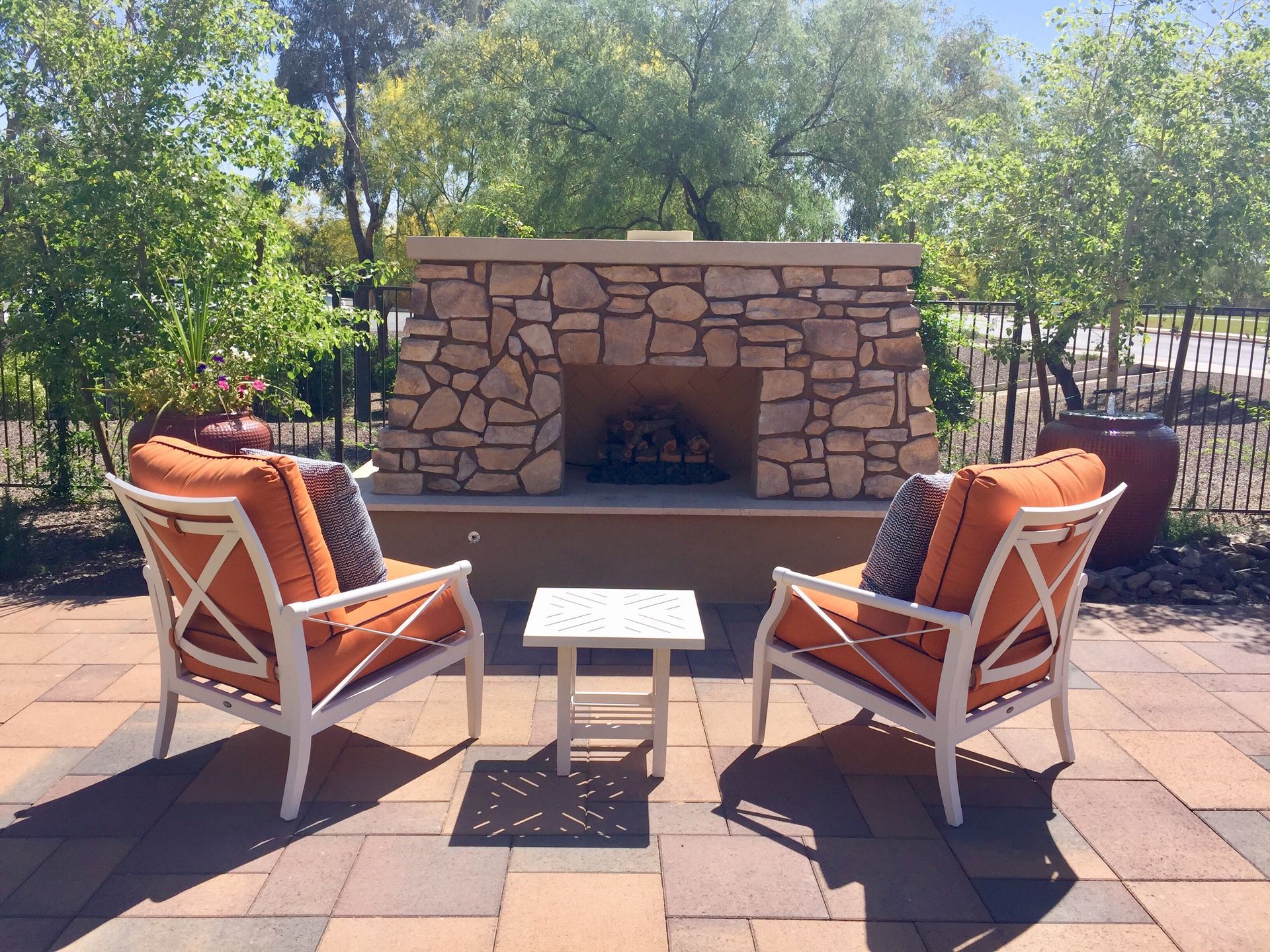
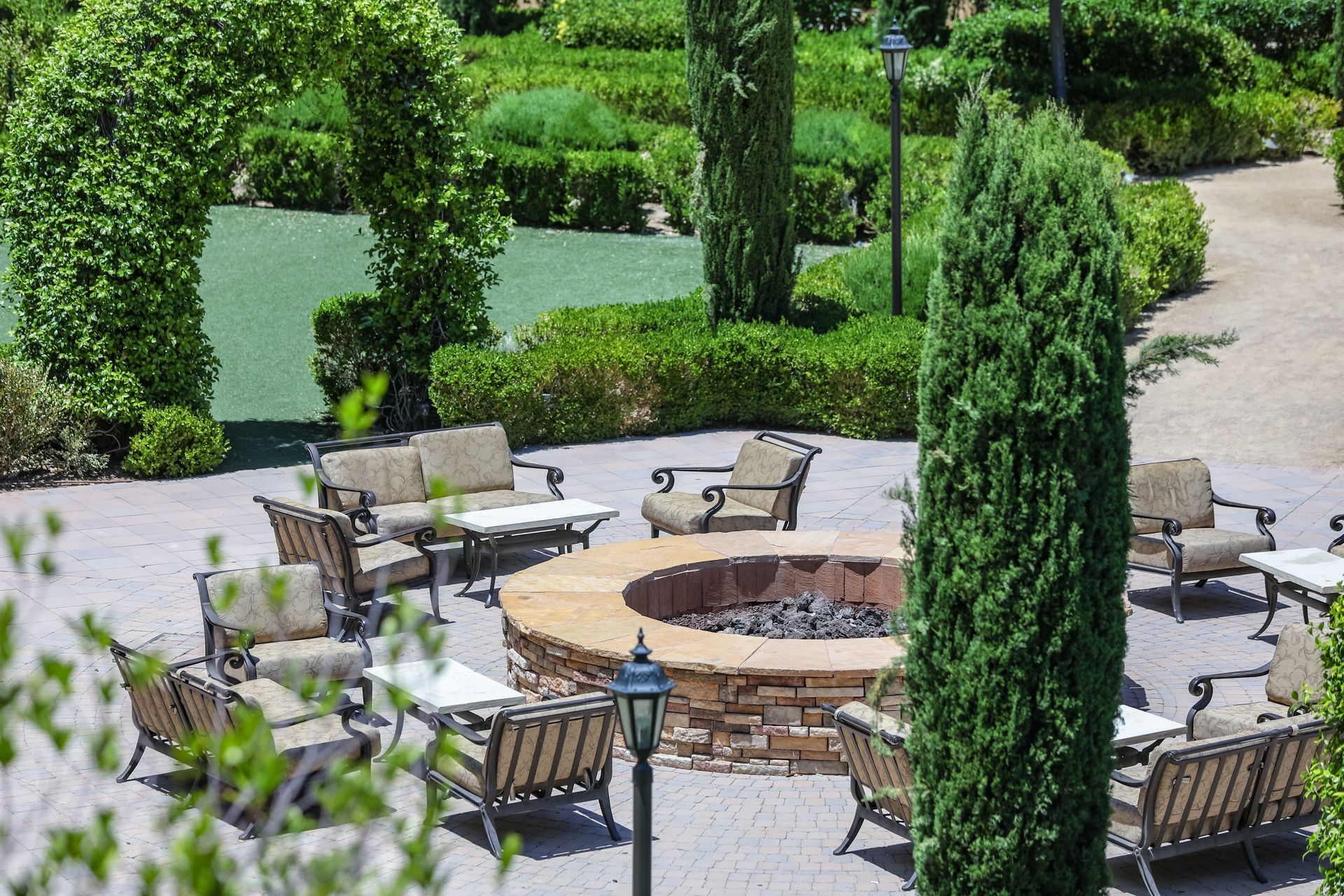
A fire pit is an open bowl or ring, typically 36 to 48 inches across, set in the middle of a seating area where occupants gather around it. Flame and smoke rise straight up; seating wraps the full perimeter. An outdoor fireplace is a vertical masonry structure, typically 6 to 10 feet tall, with a defined hearth opening facing one direction and a chimney above. Flame is directional, seating faces the hearth, and the chimney channels smoke up and away from the patio.
That single difference (open and central vs. directional and walled) cascades into every downstream decision: patio size requirements, wind sensitivity, heat distribution, permit thresholds, project cost, and feature longevity. The fire pit's strength is sociability, with all participants facing each other across the flame. The fireplace's strength is environmental control, with the chimney managing smoke and the firebox concentrating heat toward a defined seating arc. Neither is universally better; each excels at a different use case.
Real Cost Ranges in Connecticut
| Feature Type | Typical Installed Cost | What's Included |
|---|---|---|
| Portable steel fire bowl | $100 to $500 | Bowl only, no install |
| DIY paver/block fire pit kit | $500 to $1,500 | Materials only |
| Pro-built stone or paver fire pit | $1,500 to $5,000 | Footing, materials, install, patio integration |
| Gas fire pit (built-in with gas line) | $4,000 to $8,000 | Above plus gas line, burner, key valve |
| Prefab outdoor fireplace (basic) | $3,500 to $8,000 | Unit, footing, chimney finish, install |
| Custom masonry fireplace (standard) | $8,000 to $18,000 | Engineered footing, masonry build, hearth, chimney |
| Premium fireplace (large or two-sided) | $18,000 to $50,000+ | Custom design, larger footprint, premium stone |
Fire pit costs concentrate in materials and one to two days of labor. Outdoor fireplaces concentrate in the footing, masonry work, and chimney detailing, typically a week or more, often requiring both a mason and (for gas units) a licensed gas-line installer. Repair costs on either feature, when poorly built, run 40 to 70 percent of the original install once masonry has compromised, which is why proper construction the first time matters more than the savings from cutting corners.
Space, Footprint, and Patio Layout
A fire pit requires at least 8 feet of clear patio in every direction from the pit center for seating. Total footprint for a 36-inch pit with chairs at 6 feet from the rim is roughly 16 by 16 feet. An outdoor fireplace sits at the edge of the patio against a wall or property line; the structure itself takes about 6 by 4 feet of patio surface, but the seating arc needs only 10 to 12 feet of patio depth in front of it.
For long, narrow patios common to central Connecticut backyards (a result of side-yard setback requirements), a fireplace fits the geometry better than a fire pit. The recommended approach is to size the patio around the feature, not the reverse. The most common installation error we encounter is a homeowner planning a 12 by 14 patio and then attempting to fit a 36-inch fire pit in the middle.
Smoke, Wind, and Heat Direction
This is the factor most homeowners underestimate and the source of most post-installation regret. Connecticut wind shifts from northwest in winter to southwest in summer, and on any given evening can come from any direction. A fire pit in an open patio means smoke goes where the wind goes, often directly into occupants downwind.
A fireplace handles this through chimney draft, which pulls smoke up regardless of wind at seating level. The chimney must be tall enough (typically 4 to 6 feet above the firebox top) and the firebox properly sized to the chimney opening. Heat direction follows the same pattern: a fire pit radiates 360 degrees, while a fireplace concentrates radiant heat forward, making the seating area noticeably warmer.
Three site factors justify the additional cost of a fireplace:
- High wind exposure (open yards, hilltops, lots facing prevailing wind without windbreaks)
- Adjacency to the house (where fire pit smoke would drift into open windows, AC intakes, or neighboring properties)
- Extended-season use (active use into months when ambient temperatures fall below 50°F)
If none apply, a fire pit performs adequately. If any apply strongly, the fireplace earns its higher cost.
Wood, Gas, or Propane
- Wood-burning: Authentic campfire experience (sound, smell, variable flame). Trade-offs include wood sourcing and storage (a seasoned cord occupies roughly 128 cubic feet), ash management, smoke production, and seasonal burn-ban restrictions in some Connecticut towns. Heat output is highest of the three (typically 50,000 to 80,000 BTU equivalent for a residential fire pit), which extends usable temperature range further into shoulder seasons.
- Natural gas: Lights with a key valve or push-button; no smoke; less heat per BTU than wood but typical residential burners deliver 50,000 to 60,000 BTU, sufficient for a seating arc of 6 to 10 feet. Install cost adds $1,500 to $4,000 for the gas line from the house. Long-term operating cost is the lowest of the three fuel options at current Connecticut natural gas rates.
- Propane: Lower install cost than natural gas (no line trenching), with comparable BTU output. Trade-offs include tank refills (a 20-pound tank powers approximately 8 to 10 hours of continuous use) and the aesthetic challenge of concealing the tank near the feature.
Our recommendation for most central Connecticut homeowners falls into two patterns: a wood-burning fire pit when the authentic campfire experience and lower install cost are priorities, or a gas-supplied outdoor fireplace when convenience, smoke-free operation, and extended-season use take precedence.
Connecticut Permits, Setbacks, and Code
Connecticut has no statewide fire feature code. Requirements vary by town and depend on type, size, and fuel source. The general pattern across central Connecticut:
- Portable fire pits: Usually no permit required; setback distances apply (typically 10 to 15 feet from structures and property lines)
- Permanent fire pits: Building permit often required; separate mechanical or gas permit if gas-supplied
- Outdoor fireplaces: Building permit almost always required due to footing depth (below frost line, 42 inches in Connecticut) and chimney detailing
- Gas-supplied features: Gas-line permit and inspection always required, performed by a licensed gas-line installer
Wethersfield, Glastonbury, Newington, and Middletown each maintain their own building department rules. Reputable contractors handle permits as part of the project scope. HOA covenants may impose stricter requirements than town code and should be verified before contracting.
Safety Considerations for Families with Children and Pets
Fire feature safety is governed by physical layout and operational discipline more than by the feature type itself. The recommended distances and protocols apply to both fire pits and fireplaces.
- Seating distance: Minimum 3 feet between any seat and the flame source for adult use; 5 feet for households with young children
- Ember screens: Required for wood-burning fire pits; spark arrestor caps recommended for wood-burning fireplace chimneys
- Ash management: Live coals remain hot for up to 72 hours after the visible fire is extinguished; ash should be transferred to a metal container with a tight-fitting lid, never directly into trash
- Pet awareness: Hot fire pit rims can burn paws even when the fire has been out for hours; physical barriers (low fencing or planters) help during the cool-down window
- Surface materials: The patio area immediately surrounding either feature should be non-combustible (stone, paver, or concrete) for at least 3 feet in every direction
For households with frequent young-child use, a permanent fireplace with a hearth and screen offers more inherent containment than an open fire pit, which is a factor worth weighing in the decision. Homeowner insurance carriers in Connecticut generally cover both feature types when installed to code, but unpermitted construction or features installed within setback violations can affect coverage in the event of an incident. Verifying that the installation contractor pulls required permits and that final inspections are documented protects both safety and policy standing.
Expected Lifespan and Maintenance Requirements
A properly built stone or paver fire pit lasts 20 to 30 years before significant repair. A properly built outdoor fireplace lasts 25 to 50 years. The maintenance gap between them is wider than the lifespan gap suggests.
- Fire pit (wood-burning): Annual liner inspection, ash cleanout, paver shift check after winter, liner replacement every 8 to 12 years
- Fire pit (gas): Annual valve and burner inspection, leak check on gas connections
- Outdoor fireplace (wood-burning): Annual chimney cleaning ($150 to $300), mortar inspection every 3 to 5 years, chimney cap and crown inspection
- Outdoor fireplace (gas): Annual burner inspection, chimney inspection, masonry on 3 to 5 year cycle
- Both feature types: Inspect for settling or movement after major freeze-thaw events; verify drainage around the base
The most common cause of premature fireplace failure in Connecticut is inadequate footing. The footing must extend below the 42-inch frost line and be sized for the masonry load above it. Footings poured shallow heave with frost and crack the structure. We have replaced fireplaces less than 10 years old where the masonry was sound but the foundation underneath had failed.
For premium stone surrounds (bluestone, granite, fieldstone), our guide to the best natural stone options covers how material choice affects both longevity and maintenance.
Resale Value and Long-Term ROI
Outdoor fire features rank consistently among the top-performing outdoor improvements for resale value in Connecticut, but the two types differ substantially in their contribution.
Outdoor fireplaces typically add $5,000 to $15,000 to home appraisal value in central Connecticut, depending on construction quality, material grade, and integration with the surrounding hardscape. They function as a permanent architectural feature, are valued by buyers as outdoor entertainment infrastructure, and rarely need to be replaced for cosmetic reasons during a typical ownership period.
Fire pits add $1,000 to $3,000 to appraisal value when built as permanent installations. The lower contribution reflects that fire pits are perceived as a lifestyle amenity rather than structural infrastructure, and that buyers can install one themselves at modest cost. The ROI percentage, however, is often higher for fire pits because the initial investment is so much lower.
For homeowners whose primary motivation is resale value, the outdoor fireplace is the stronger choice. For homeowners whose primary motivation is enjoying the feature themselves, ROI percentage favors the fire pit. The two motivations frequently coexist and should be weighed honestly before committing to the larger investment.
Matching the Feature to Your Site
| Your Situation | Recommended Feature |
|---|---|
| Casual group gatherings | Fire pit |
| Modest budget ($1,500 to $5,000) | Fire pit |
| Open central patio with all-side space | Fire pit |
| Households with frequent young-child use | Fireplace (better containment) |
| Frequent wind exposure or house adjacency | Fireplace |
| Extended-season use (late fall) | Fireplace |
| Long, narrow patio shape | Fireplace |
| Strong architectural focal point desired | Fireplace |
| Resale value is a priority | Fireplace |
| Authentic wood-fire experience | Either, wood-burning |
| Push-button convenience | Either, gas-supplied |
A third pattern merits attention: combination installations. A separate fire pit area in one section of the yard plus a fireplace integrated with covered seating on the patio is a viable approach for larger properties with the budget to support it. We construct these combination projects in central Connecticut, typically for properties with multiple outdoor zones. For homeowners coordinating full hardscape scope, our overview of patio cost factors covers how fire features integrate into the broader project budget.
Get a Fire Feature Built Right in Central Connecticut
The right fire feature depends on patio shape, wind exposure, family use patterns, and budget. The only way to determine which one fits is to evaluate the site with someone who installs both. Use our
contact form to schedule a free on-site consultation anywhere in our central Connecticut service area. For projects combining fire features with patios or
retaining walls, we coordinate the design so the elements integrate into one coherent outdoor space.
Frequently Asked Questions
Are outdoor fireplaces worth the cost over a fire pit?
For casual gatherings on a modest budget, a fire pit performs better at a fraction of the cost. For directional heat, wind-resistant operation, an architectural focal point, or higher resale value, a fireplace earns the additional investment. Homeowners who regret going cheaper typically had specific site conditions (wind exposure, family use patterns, desire for longer season) that pointed toward a fireplace from the start.
Do I need a permit to build a fire pit or outdoor fireplace in Connecticut?
Portable fire pits usually require no permit. Permanent masonry fire pits often do, particularly with a gas line. Outdoor fireplaces almost always require building permits due to footing depth and chimney detailing. Gas-supplied features always require gas-line permits. Check with your town's building department before contracting.
How far does a fire pit need to be from the house in Connecticut?
Most central Connecticut towns require 10 to 15 feet of clearance between a fire pit and any structure, plus comparable setbacks from property lines, fences, and overhanging trees. This is a fire-code requirement, not a recommendation, and affects both safety and insurance coverage.
Can I add a gas line to a wood-burning fireplace later?
Yes. Adding a gas log set to a wood-burning fireplace converts it to gas while retaining the existing structure. Cost runs $1,500 to $4,000 depending on gas line distance. The reverse (converting gas to wood-burning) is significantly more difficult because gas units typically lack chimney capacity and clearance for wood combustion.
How many months per year can I use a fire feature in Connecticut?
A wood-burning outdoor fireplace with proper wind protection typically supports active use from April through November, with limited use possible in December and February depending on snow conditions and temperatures. A fire pit's usable window is shorter (May through October for most central Connecticut yards) because the open design loses heat faster and is more sensitive to wind. Adding gas heating elements or a wind-protected seating area extends both feature types by approximately 4 to 6 weeks on either end of the season.
Recent Posts